

Finding top budget friendly beach destinations for family vacations requires filtering out the resort marketing that dominates most beach travel content and finding the places where the actual daily cost of feeding, housing, and entertaining a family of four or five lands within a budget that does not require a payment plan afterward. I have taken family beach trips that cost a reasonable amount and ones that cost an embarrassing amount, and the difference was almost never the quality of the ocean or the color of the sand. It was the infrastructure built around it and whether we chose the destination that served families honestly or the one that extracted maximum revenue from the fact that children do not negotiate.
1. Myrtle Beach, South Carolina
Myrtle Beach is the family beach destination that gets dismissed by travel publications and chosen by actual families, which tells you something important about whose interests those publications are serving. The beach itself is wide, flat, and gentle enough for young children. The accommodation options range from budget motels at $60 a night to full condo rentals with kitchens that sleep six to eight people at $150 to $200 a night. The kitchen access specifically is where the family budget math changes dramatically.
Broadway at the Beach provides free entertainment in the form of street performers, open plazas, and lakeside walking that costs nothing and occupies children for hours. Mini golf courses line the Grand Strand at $10 to $15 per round, which at family scale beats almost any structured paid activity for cost per hour of genuine enjoyment. The Myrtle Beach State Park charges $8 per vehicle for access to a less crowded, more natural beach experience than the main strip provides, with hiking trails through maritime forest and fishing from a pier that keeps older children engaged beyond the basic beach visit. Grocery stores within a ten-minute drive of virtually every accommodation option make self-catering genuinely practical rather than aspirational, and a family that cooks breakfast and lunch daily while eating dinner out three times during a week-long stay saves $300 to $400 compared to restaurant dining for every meal.
2. Gulf Shores and Orange Beach, Alabama
The Alabama Gulf Coast is the budget family beach secret that Gulf Coast regulars are quietly protective of, partly because it genuinely works and partly because they would prefer it did not fill up any faster than it already has. The water along this stretch of coast is calm, clear, and warm from late April through October. The sand is white and soft enough to satisfy every expectation a beach vacation should create.
Condominium rentals along the coast average $150 to $250 a night for two-bedroom units that sleep six comfortably, which competes favorably with a single hotel room in more premium beach markets. Gulf State Park charges $6 per vehicle and provides pier fishing, a nature center, hiking trails, and a two-mile beach that is consistently less crowded than the commercial stretches. The Alabama Gulf Coast Zoo charges $20 per adult and $15 per child for a full afternoon of genuine animal engagement that keeps children occupied without theme park pricing. Seafood shacks and casual waterfront restaurants serve fresh Gulf shrimp, oysters, and fish at prices that reflect the local economy rather than a tourist premium, with full family meals regularly coming in under $60 before tip.
3. Outer Banks, North Carolina
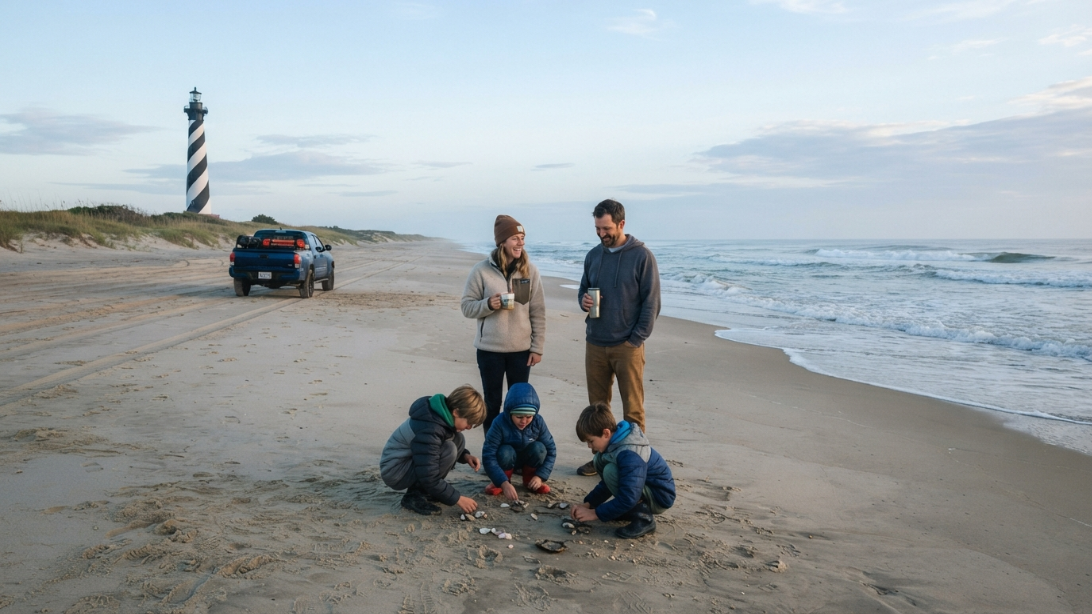
The Outer Banks operates on a fundamentally different economic model than most beach destinations because the vacation rental market dominates accommodation almost entirely, and vacation rentals for a family always compare favorably to the hotel-plus-restaurant model that most beach resorts enforce by design. A four-bedroom beach house sleeping eight to ten people rents for $1,500 to $2,500 per week, which divided among two families sharing the house produces a per-family accommodation cost of $750 to $1,250 for a full week at the beach.
Cape Hatteras National Seashore covers much of the Outer Banks coastline and is completely free to access, providing some of the most uncrowded, naturally beautiful beach in the eastern United States without an admission fee. The wild horses of Corolla, accessible by four-wheel drive vehicle on the northern beaches, provide one of those genuinely magical family experiences that children retain into adulthood. Kayak rentals through local outfitters run $30 to $50 for a half day. The Wright Brothers National Memorial at Kitty Hawk charges $10 per adult and is free for children under fifteen, providing a legitimately interesting educational experience that older children engage with more genuinely than most forced educational activities. Grocery stores in Kill Devil Hills and Nags Head supply the full kitchen that every Outer Banks rental house provides, which makes self-catering across the full week realistic and financially significant.
Top Budget Friendly Beach Destinations for Family Vacations Outside the United States
International family beach destinations add airfare to the budget calculation but often reduce daily costs dramatically enough that the overall trip competes favorably with premium domestic alternatives. These destinations provide the most accessible international family beach experiences within reach of a realistic family budget.
Cancún and the Riviera Maya, Mexico
The all-inclusive resort model in Cancún and the Riviera Maya is the family travel format that makes the most mathematical sense for some budget calculations, specifically because a single upfront price covers accommodation, all meals, all beverages, and most activities for every family member simultaneously. All-inclusive resorts in this region for a family of four average $200 to $350 per night total at mid-range properties like Iberostar, Barceló, and Grand Palladium, which when divided by four people and compared to the individual costs of accommodation, dining, and activities separately, often represents better value than it initially appears.
For families who prefer independence to all-inclusive structure, the town of Playa del Carmen offers apartment rentals, family-friendly guesthouses, and a pedestrianized beach strip lined with restaurants at prices significantly below resort levels. The beach at Playa del Carmen is public and free. The Xcaret ecological park charges $90 to $120 per adult and $50 to $60 per child for a full day of swimming in underground rivers, snorkeling, wildlife exhibits, and cultural performances that constitute one of the most genuinely impressive family day experiences in the region.
Puerto Rico
Puerto Rico deserves specific mention in any family beach budget discussion because it requires no passport for US citizens and no currency exchange, which eliminates two significant logistical friction points that make international travel feel complicated for families with children. Flights from East Coast cities land in San Juan in two to three hours at prices that regularly compete with domestic flights to Florida beach destinations.
Luquillo Beach is one of the most family-friendly beaches in the Caribbean: calm protected water, kiosks selling fresh seafood and local snacks at $3 to $8 per item, covered pavilions that provide shade without requiring a beach club purchase, and lifeguards on duty during standard hours. Vacation rentals in Luquillo and nearby Fajardo average $100 to $180 a night for family-sized properties with full kitchens. The El Yunque National Rainforest, the only tropical rainforest in the US National Forest System, charges no entrance fee and provides hiking, waterfall swimming, and wildlife sightseeing that adds a completely different dimension to the trip beyond beach time alone.
Costa Rica’s Pacific Coast
Costa Rica’s Pacific Coast beaches, particularly those near Manuel Antonio and Tamarindo, combine wildlife viewing with beach access in a way that no domestic alternative replicates. Howler monkeys, sloths, scarlet macaws, and iguanas encounter families at the beach itself rather than requiring a separate zoo or wildlife park visit, which is the specific combination that makes Costa Rica unusually memorable for children in the six to fourteen age range.
Vacation rentals near Manuel Antonio average $100 to $180 a night for family-sized properties. Manuel Antonio National Park charges $20 per adult and $10 per child for entry to a park that contains both protected wildlife habitat and beach access within the same boundaries. The Soda restaurants, small family-run Costa Rican eateries that serve the traditional casado plate of rice, beans, protein, salad, and plantains, charge $6 to $10 for a full meal that fills an adult completely, making family dining genuinely affordable at the local restaurant level.
4. Clearwater Beach, Florida
Clearwater Beach consistently ranks among the top beaches in the country for a combination of water quality, sand quality, and family infrastructure, and it does so at price points that vary widely enough to accommodate budgets across a significant range. The beach itself is free, wide, and bordered by calm Gulf water that is gentle enough for children of all swimming abilities.
Pier 60 at Clearwater Beach hosts free nightly sunset celebrations from two hours before sunset until two hours after, with street performers, artisan vendors, and live music that provides genuine entertainment at zero cost. The Clearwater Marine Aquarium, home to Winter the dolphin whose story was told in the Dolphin Tale film, charges $29 per adult and $24 per child for a full-day admission that families with children who have seen the film treat as a pilgrimage rather than a tourist attraction. Accommodation ranges from budget motels on the mainland connected by a short drive to the beach at $70 to $100 a night, to beachfront condos with full kitchens at $180 to $280 a night. The Courtney Campbell Causeway connects Clearwater to Tampa and provides access to significantly cheaper grocery stores, restaurants, and accommodation options that serve families willing to drive ten to fifteen minutes for meaningfully lower prices.
5. Virginia Beach, Virginia
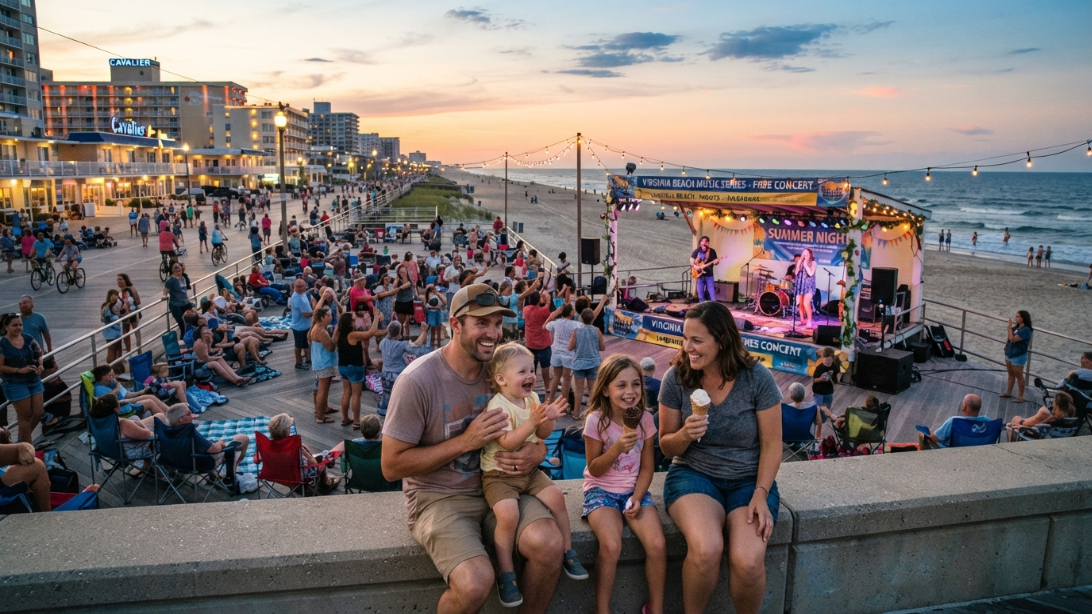
Virginia Beach is the Mid-Atlantic family beach destination that is consistently underpriced relative to its actual quality, partly because it sits in a region that lacks the marketing infrastructure of the Florida and Carolina beach markets and partly because the military community that anchors the local economy keeps consumer prices more honest than purely tourist-dependent beach economies maintain.
The Virginia Beach Boardwalk stretches three miles along the oceanfront and costs nothing to walk. Street performers, public art installations, and free summer concert series provide entertainment value that families access without spending money they did not plan to spend. The Virginia Aquarium and Marine Science Center charges $28 per adult and $23 per child for a genuinely excellent facility that marine biology enthusiasts and casual visitors both find worth the admission. First Landing State Park at the northern end of Virginia Beach provides camping at $24 to $40 a night on sites that are a short walk from the Chesapeake Bay, representing one of the most affordable family beach accommodation options on the East Coast that does not involve sleeping on the actual sand. Vacation rentals in the Sandbridge area south of the main strip offer beachfront properties at prices noticeably lower than the oceanfront strip for families willing to be slightly removed from the commercial center.
6. Galveston, Texas
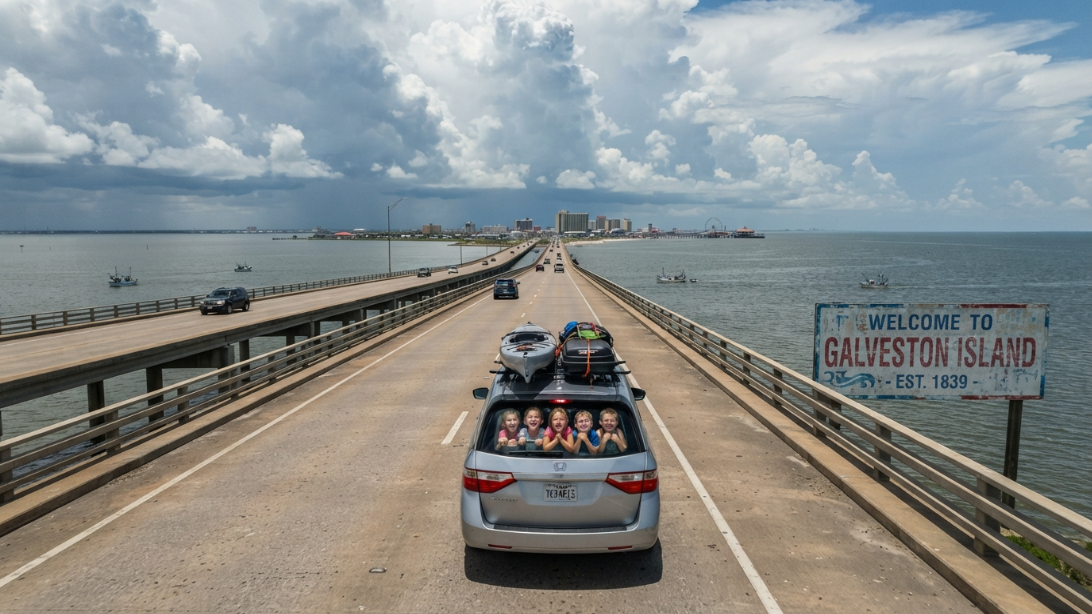
Galveston is the Gulf Coast family beach destination closest to Houston and serves families from across Texas and the broader South as a drivable beach option that eliminates airfare from the budget calculation entirely. The drive from Houston takes approximately one hour, from San Antonio about three and a half hours, and from Dallas about five hours, making it a legitimate road trip destination for a region where beach access otherwise requires significant travel.
The Galveston Island State Park charges $5 per person for access to four miles of uncrowded beach with camping facilities, picnic areas, and nature programs that engage children beyond passive beach sitting. The historic Strand District provides free walking entertainment through Victorian architecture, candy shops, and a pedestrian-friendly commercial street where ice cream costs $3 and browsing costs nothing. Schlitterbahn Galveston, the water park on the island, represents the biggest single-day family expenditure at $50 to $65 per person, but it provides a full day of structured entertainment that eliminates any other spending for that day. Vacation rentals on the island sleep six to eight people at $120 to $200 a night, and the driving distance from major Texas cities means families can pack a substantial amount of their own food rather than purchasing everything at destination prices.
7. Jekyll Island, Georgia
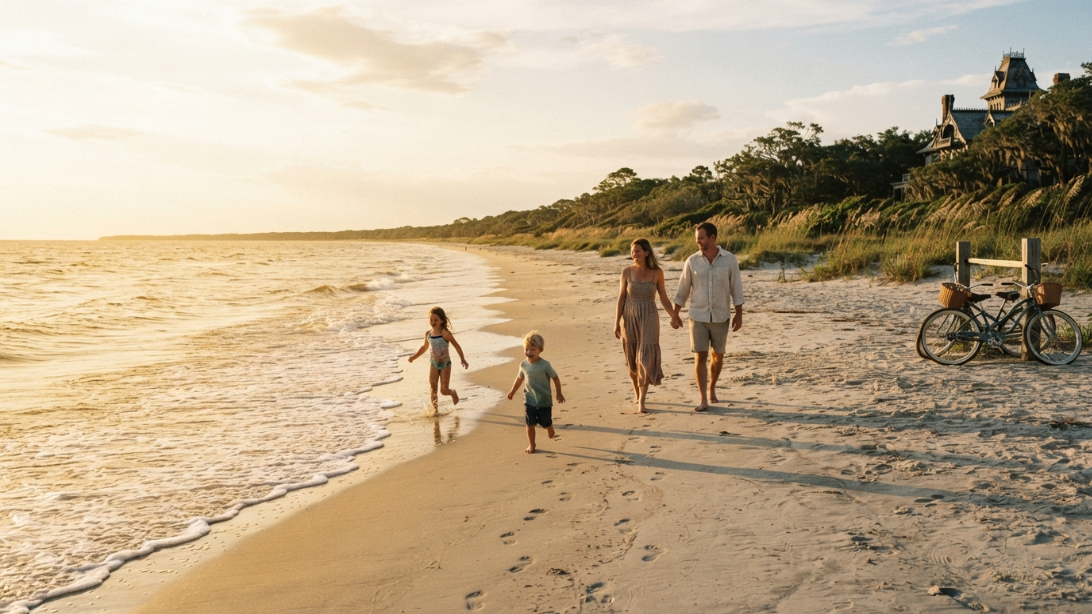
Jekyll Island sits in a category of its own among Georgia’s Golden Isles as the budget-friendly alternative to the more expensive Sea Island and St. Simons Island that sit nearby. The island is owned by the state of Georgia, which has deliberately limited commercial development to preserve the natural character of the coastline, and this limitation produces a beach experience that feels genuinely unhurried and natural rather than commercially manufactured.
The Jekyll Island Historic District is free to walk and explore, providing Victorian-era cottages and mansion ruins from the island’s Gilded Age history that children find genuinely interesting in a slightly spooky, exploratory way. Bike rentals through the island’s trail system run $15 to $25 for a half day, and the twenty-three miles of paved bike paths connect every part of the island without requiring a car once you arrive. Accommodation options include the historic Jekyll Island Club Hotel at premium pricing and the Holiday Inn Resort Jekyll Island and several vacation rental options at $120 to $180 a night for family-sized properties. The Georgia Sea Turtle Center charges $10 per adult and $7 per child for an educational experience that children who encounter it often describe as the best part of the trip, particularly if a turtle rehabilitation release happens to coincide with the visit.
8. Padre Island National Seashore, Texas
Padre Island National Seashore is the longest stretch of undeveloped barrier island in the world, and it charges $25 per vehicle for a seven-day pass that covers unlimited beach access across sixty miles of protected coastline. For families who want genuine wilderness beach rather than commercial strip beach, this is the most affordable option anywhere in the continental United States.
Camping on the national seashore costs $8 to $25 a night depending on the campsite type and facility level, which produces accommodation costs lower than virtually any other beach destination covered in this article. The nearby city of Corpus Christi provides hotels, vacation rentals, grocery stores, and restaurants for families who want the national seashore beach experience during the day with commercial infrastructure available in the evening. The Texas State Aquarium in Corpus Christi charges $30 per adult and $22 per child for an excellent regional aquarium with strong programs around Gulf Coast marine life. Sea turtle hatching season from June through August produces the occasional public beach event around nest protection and hatchling releases that the national seashore staff manages, representing one of the most memorable family wildlife experiences available on any US beach.
How to Reduce Beach Vacation Costs Regardless of Destination
The destination accounts for roughly half of what a family beach vacation costs. The spending habits within any destination account for the other half, and these apply wherever you go.
Vacation rental properties with full kitchens reduce food costs by 40 to 60 percent compared to dining out for every meal. A family that eats breakfast and lunch from the kitchen and dines out only for dinner once or twice during the week saves $400 to $600 compared to restaurant dependence across all meals. Book vacation rentals directly through the property owner or through VRBO rather than Airbnb where possible: VRBO charges lower service fees that compound meaningfully at family rental price points. Pack a beach bag with snacks, reusable water bottles, sunscreen, and entertainment from home rather than buying these at destination prices where a bottle of sunscreen costs $20 and a bottle of water costs $5. Book activities that offer free access for children under a specific age, which varies by attraction, and align children’s ages with those thresholds wherever possible. Ask about family packages at paid attractions: most charge less per person for groups of four or more and advertise this discount only on the specific page of their website that nobody visits organically.
Travel during shoulder season, specifically the weeks immediately before and after peak summer, which falls in late May to early June and late August to early September. Most school schedules now allow travel flexibility in these windows, and accommodation prices drop 20 to 35 percent from peak summer rates at the same properties during the same weather conditions.
Frequently Asked Questions
What are the top budget friendly beach destinations for family vacations that are drivable from the Midwest?
Virginia Beach, Myrtle Beach, and Gulf Shores are all drivable from Midwest states within eight to twelve hours depending on the starting city, which eliminates airfare for a family of four that would otherwise cost $800 to $1,600 round trip. The Outer Banks requires a longer drive from the northern Midwest but rewards it with the vacation rental economics described above. Galveston is the practical choice for Texas and Oklahoma families. Padre Island National Seashore provides the most affordable drivable option for families prioritizing low cost over commercial amenities.
Is an all-inclusive resort actually cheaper for a family beach vacation?
It depends on the family’s spending patterns without the all-inclusive structure. For families who would otherwise spend heavily on dining, beverages, and daily activities, an all-inclusive often represents better value than the equivalent costs paid separately. For families who self-cater extensively, limit alcohol, and choose free or low-cost activities, the all-inclusive premium frequently exceeds what the family would have spent independently. Running the comparison calculation with honest estimates of what your family actually consumes produces the right answer for your specific situation.
How far in advance should I book a family beach vacation rental?
For peak summer weeks at popular destinations, six to nine months in advance is realistic for the properties and locations you actually want. Families who begin searching in January for July bookings consistently access better properties at lower prices than those searching in April or May for the same period. Last-minute vacation rental deals exist but favor flexible families without school schedule constraints, which eliminates most peak-summer family travelers.
What beach destinations are best for families with children who cannot swim well?
Gulf Shores and Orange Beach, Clearwater Beach, and Puerto Rico’s Luquillo Beach all offer calm, protected, shallow water that non-swimmers and beginning swimmers navigate safely without constant adult intervention. The Gulf of Mexico along the Alabama and Florida coast is particularly gentle during summer months when wave action is minimal and water temperatures allow extended time without cold-water fatigue affecting young swimmers.
How do I keep beach vacation food costs reasonable without cooking every single meal?
The breakfast and lunch rule does most of the work: breakfast from the rental kitchen costs $2 to $4 per person compared to $8 to $15 per person at a restaurant, and lunch from packed coolers costs $3 to $5 per person compared to $12 to $20 at a beach restaurant. Dinners out become genuinely affordable when the other two meals do not compete for the same budget. Choosing local seafood shacks and casual restaurants over branded hotel restaurants and beachfront resort dining reduces dinner costs by 30 to 50 percent for equivalent or better food quality.
Conclusion
The best family beach vacation is the one that leaves everyone sunburned, sandy, and genuinely happy rather than sunburned, sandy, and quietly calculating how long it will take to pay off the credit card. Every destination on this list delivers the beach experience a family actually needs without the pricing structure that turns a week of ocean time into a financial event. Which beach is your family heading to this summer?