

The best affordable European cities for college student travelers are not the ones that appear most frequently in the aspirational travel content that fills social media feeds with perfectly lit photographs of places that cost $300 a night to sleep near. I traveled through Europe on a college budget that would make most travel influencers genuinely uncomfortable, and I ate well, slept fine, and saw things I still think about years later. The cities below are the ones where the money stretches furthest, the hostels are genuinely good, the culture is genuinely rich, and a student with $40 to $60 a day can have a real experience rather than a compromised one.
How to Actually Make a European Student Trip Work Financially
Before the city list, the financial architecture of a European student trip deserves honest treatment because most budget travel advice glosses over the structural decisions that determine whether the trip is genuinely affordable or merely aspirationally so.
Flights are the largest single cost and the one with the most variance based on booking behavior. Flying into a budget airline hub rather than the intended destination and continuing by train or bus often costs 40 to 60 percent less than flying direct. Landing in London and taking a Ryanair flight to Kraków costs less than flying to Kraków directly from most US cities. Landing in Lisbon and taking a train to Porto costs less than flying into Porto from the US with an additional connection. Scott’s Cheap Flights and Google Flights with flexible date search are the two tools that find the deals that make transatlantic student travel financially realistic. Setting fare alerts for multiple European entry points simultaneously rather than searching for specific cities produces the lowest prices because you follow the cheapest fare rather than asking the cheapest fare to follow your predetermined plan.
Accommodation at a budget hostel averages $15 to $30 per night across Eastern and Southern Europe and $25 to $45 per night in Western Europe. Hostelworld filters by guest rating, and anything above 8.5 is reliably clean, safe, and social. The social component of hostel accommodation is not incidental for student travelers: the common room of a well-reviewed hostel in Budapest or Kraków connects you with other travelers who share restaurant recommendations, travel tips, and occasional companionship that makes solo travel feel less solitary and more genuinely adventurous.
The Eurail Pass is worth buying only for students covering significant distances across multiple countries within a compressed timeframe. For students spending four or more days in each city, individual train and bus tickets through Omio, FlixBus, and direct rail booking sites consistently cost less than a pass. The ISIC student card at $25 provides discounts at museums, attractions, and some transportation across Europe that frequently cover the card cost within the first two days of use.
1. Kraków, Poland
Kraków is the city that experienced European budget travelers recommend most consistently and that inexperienced ones most frequently overlook in favor of more familiar names. This gap between reputation and reality works entirely in a student traveler’s favor.
The Old Town is a UNESCO World Heritage Site that costs nothing to walk through, and the medieval market square, Rynek Główny, is one of the most architecturally extraordinary public spaces in Europe. Sitting at a café table in the square with a coffee costs $2. A full meal of pierogi and zurek soup at a milk bar, the Polish cafeteria-style restaurant that serves traditional food at prices below any comparable tourist restaurant, runs $4 to $6. A half-liter of local beer at a bar in the Kazimierz Jewish Quarter costs $1.50 to $2. Hostel beds in the Old Town average $12 to $18 a night in properties that consistently receive strong reviews.
Wawel Castle charges $5 to $8 per attraction section with a combined ticket available, and the castle grounds are free to walk. The Auschwitz-Birkenau Memorial and Museum is located 75 minutes from Kraków by direct bus and provides one of the most significant and sobering historical experiences available to any traveler in Europe. Admission is free but advance booking is required and strongly recommended. Wieliczka Salt Mine, a UNESCO site 30 minutes from Kraków by bus, charges $20 to $25 for an underground tour of carved salt chambers that constitutes one of the genuinely unexpected experiences of any European student trip. Total daily budget in Kraków including hostel, all meals, and one paid attraction: $35 to $45.
2. Budapest, Hungary
Budapest delivers a capital city experience at prices that most Western European cities charge for a mid-range hostel and a sandwich. The combination of stunning architecture, extraordinary thermal bath culture, a ruin bar nightlife scene built inside abandoned buildings, and a food culture that is both delicious and cheap makes it one of the most complete student travel destinations in Europe.
Széchenyi Thermal Bath charges approximately $20 for a day pass and is one of the most legitimately extraordinary experiences available to any traveler in Europe regardless of budget. The combination of hot thermal pools, ornate Neo-Baroque architecture, and the specific pleasure of soaking in outdoor pools while chess players compete at poolside boards is something that photographs cannot adequately represent. Ruin bars in the VII District, specifically Szimpla Kert which is the most famous and genuinely worth visiting despite its reputation, serve drinks for $2 to $3 in spaces built inside partially demolished buildings decorated with salvaged furniture and surrealist installations.
A traditional Hungarian meal of goulash soup, bread, and a main course at a local étterem restaurant costs $8 to $12. The Hungarian National Museum charges $4 for students with an ISIC card. A cruise on the Danube at sunset costs $15 to $20 and provides the iconic view of the Chain Bridge, the Parliament building, and Buda Castle illuminated against the river that justified every photograph you have ever seen of Budapest. Wizz Air and Ryanair connect Budapest to London, Berlin, Rome, and Barcelona for under €30 one way, making it an ideal base for multi-city European travel. Hostel beds average $15 to $22 a night in the city center.
3. Lisbon, Portugal
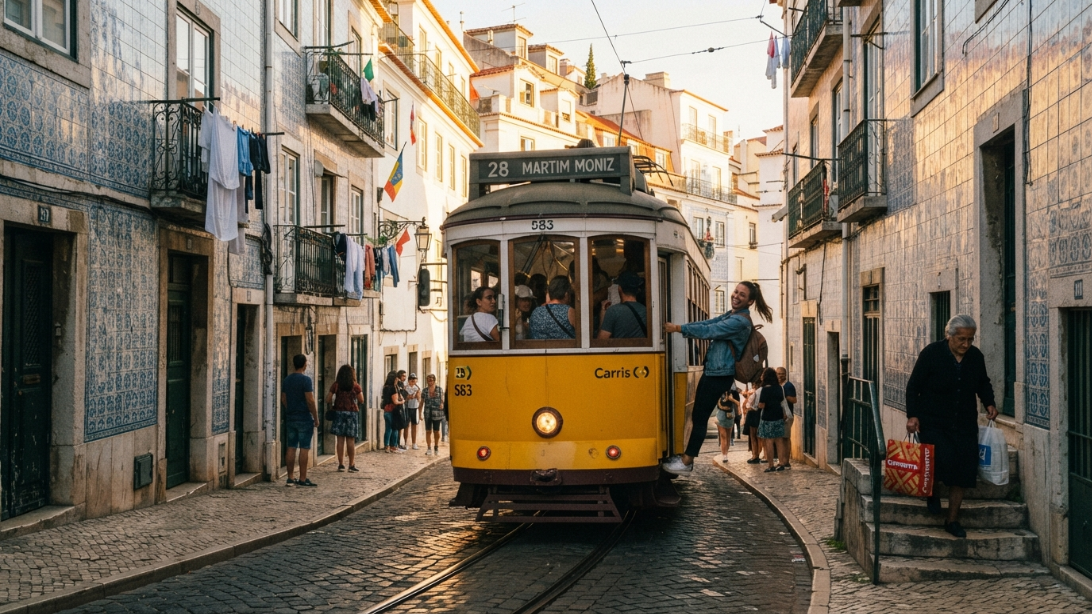
Lisbon occupies a specific position in European budget travel as the Western European capital that has not yet fully crossed the affordability threshold that Amsterdam, Barcelona, and Paris crossed years ago. It is more expensive than Eastern European alternatives but significantly cheaper than most Western European cities of comparable cultural richness.
The 28 tram costs $3 for a single ride and passes through the most architecturally beautiful neighborhoods in the city including Alfama, the Mouraria, and the Baixa, providing a moving tour of tiled facades and hillside vistas that tourist tram companies charge $20 to $30 to replicate with commentary. A pastel de nata from a neighborhood bakery costs $0.80 to $1.20. A glass of house wine at a local tasca costs $1.50 to $2. A full meal of grilled fish, bread, salad, and wine at an Alfama restaurant costs $12 to $18.
Miradouros, the hilltop viewpoints scattered across the city, provide the best views of the river and the hills from free public spaces that require no admission and no reservation. The Museu Nacional do Azulejo charges $5 for student admission and contains the most comprehensive collection of Portuguese decorative tile in the world, which sounds like a niche interest until you are standing in front of a forty-meter panel depicting seventeenth century Lisbon and genuinely cannot look away. TAP Air Portugal student fares and frequent sale prices from East Coast US cities to Lisbon make the transatlantic flight the most accessible of any European destination on this list. Hostel beds in the historic center average $20 to $28 a night.
Best Affordable European Cities for College Student Travelers in Eastern Europe
Eastern Europe provides the most extreme value available to student travelers within the European continent, and the cultural richness of the region is genuinely underestimated by travelers whose European mental map still centers on Paris, Rome, and Amsterdam.
Tbilisi, Georgia
Georgia sits at the edge of where Europe and Asia meet, and Tbilisi reflects this position in its architecture, food, wine culture, and general atmosphere in ways that produce an experience genuinely unlike any other city on the continent. The old town neighborhoods of Abanotubani and Fabrika contain crumbling wooden balconied buildings, sulfuric free public baths, and an arts district built inside a converted Soviet factory that attracts a creative community of locals and travelers who have discovered the city before the mainstream travel market catches up.
Georgian natural wine, made in clay qvevri vessels using a method thousands of years old, costs $2 to $4 per glass at local wine bars. A full meal of khachapuri, khinkali dumplings, and salad at a Georgian restaurant costs $6 to $9. Hostel beds average $10 to $15 a night in the old town. Turkish Airlines connects Tbilisi from most US cities via Istanbul with competitive fares, and the Istanbul layover is itself worth extending into a day or two given the city’s extraordinary accessibility. The Narikala Fortress overlooking the old town and the Mtatsminda Funicular to the hilltop park above the city are both free or nearly free experiences that provide orientation and perspective on one of the most genuinely surprising cities available to European student travelers.
Sarajevo, Bosnia and Herzegovina
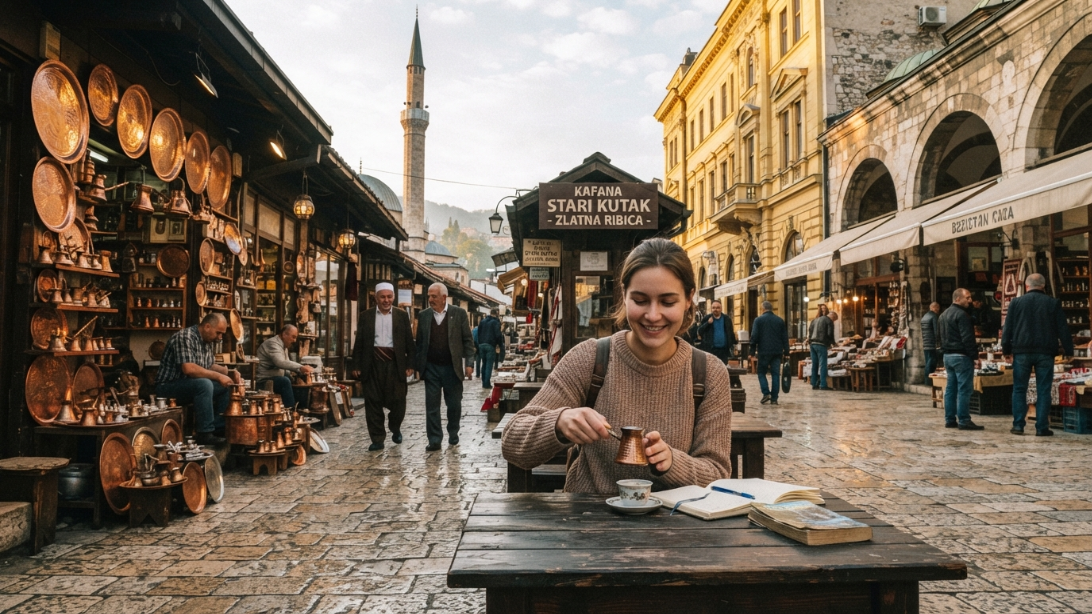
Sarajevo is the city that stops every traveler who visits it, and most of them arrive without fully knowing what to expect. The convergence of Ottoman, Austro-Hungarian, and Yugoslav architectural and cultural influences produces a city that looks and feels like nowhere else in Europe, and the weight of recent history gives it an emotional depth that purely aesthetic destinations cannot match.
The Baščaršija old bazaar dates from the fifteenth century and is completely free to walk through, full of copper craftsmen, coffee houses serving traditional Bosnian coffee in džezva pots, and bakeries selling burek pastry for $1 to $2. A full meal of ćevapi with somun bread and kajmak cream cheese at a local restaurant costs $4 to $6. A glass of local beer costs $1 to $1.50. The Sarajevo War Tunnel Museum, documenting the 800-meter tunnel dug under the airport during the 1992 to 1995 siege of the city, charges $5 for admission and provides one of the most affecting historical experiences available in contemporary Europe. Ryanair and Wizz Air connect Sarajevo from London, Frankfurt, and Vienna for under €40 one way. Hostel beds average $12 to $18 a night.
4. Porto, Portugal
Porto does everything Lisbon does and argues quietly that it does some of it better, at slightly lower prices, with fewer tourists, and with a specific authenticity of character that comes from being the second city of a country whose travel attention concentrates primarily on the capital. For student travelers who research enough to find it, Porto rewards the effort significantly.
The Livraria Lello bookshop charges $6 for entry that converts to a discount on book purchases, and it is one of the most extraordinary bookshop interiors in the world, which is a claim that sounds like hyperbole until you are standing on the carved wooden staircase looking up at the Art Nouveau ceiling. Port wine tasting at the lodges of Vila Nova de Gaia across the Douro River from the city center starts at $5 for a two-pour introduction to the wine that the city has produced and exported for three centuries. The Ribeira waterfront along the river is free to walk and provides the most photographed view in the city at no cost. A francesinha, Porto’s famous layered meat sandwich in a spiced beer-and-tomato sauce, costs $8 to $12 at a traditional restaurant and constitutes a complete meal. Flixbus connects Porto to Lisbon in three and a half hours for $10 to $20, making a combined Porto and Lisbon itinerary straightforward for a student covering both cities in a single trip.
5. Athens, Greece
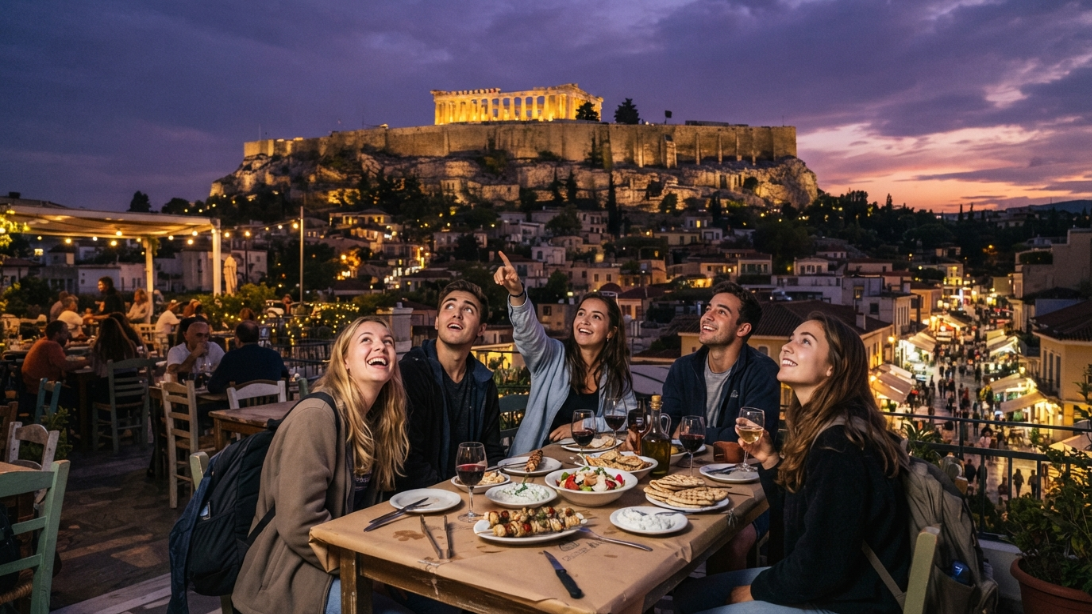
Athens is the European city with the highest ratio of extraordinary historical significance to daily living cost, and for student travelers who engage with history and archaeology it represents one of the best absolute values available anywhere on the continent. The Acropolis is arguably the single most significant surviving monument of Western civilization and charges $20 for standard admission, reduced to $10 for students with documentation.
The Athens Combined Ticket at $30 covers the Acropolis and six additional significant archaeological sites including the Ancient Agora, the Temple of Olympian Zeus, and the Kerameikos cemetery, representing genuinely extraordinary historical access at a price that equals one museum admission in many Western European cities. The Monastiraki flea market neighborhood and the Psiri district contain dozens of tavernas serving traditional Greek food at prices that have not yet fully adjusted to the tourism premium: a plate of grilled souvlaki with pita costs $6 to $8, a Greek salad costs $5, and a glass of house wine costs $2 to $3.
Hostel beds in the Monastiraki and Koukaki neighborhoods average $18 to $28 a night. The Athens Riviera is accessible by tram from the city center for $1.50, providing free beach access at Glyfada and Vouliagmeni that most visitors do not associate with Athens but that constitutes one of the most pleasant free afternoon activities available in any European capital. Aegean Airlines and Ryanair connect Athens to a wide range of European cities for competitive fares, and ferry connections from the port of Piraeus open the Greek islands to student travelers for $10 to $40 depending on distance and speed of the vessel.
6. Seville, Spain
Seville is consistently the most affordable major Spanish city for travelers, sitting below Barcelona and Madrid in both accommodation and daily living costs while providing a cultural intensity through flamenco, Moorish architecture, tapas culture, and the specific theatrical warmth of Andalusian public life that arguably exceeds both larger cities in atmosphere per euro spent.
The Real Alcázar palace complex charges $15 for general admission and represents one of the most extraordinary surviving examples of Mudéjar architecture in the world, a palace built for a Christian king by Islamic craftsmen in the fourteenth century that produces a visual disorientation between European and Islamic architectural traditions in every room. The Cathedral of Seville and the Giralda tower charge $12 for combined student admission and contain Christopher Columbus’s tomb along with the largest Gothic cathedral interior in the world.
Tapas culture in Seville has a specific characteristic that student travelers discover with something approaching reverence: many traditional bars still serve a free tapa with every drink ordered, which means a $2.50 beer comes with a small plate of food that reduces the daily food budget significantly. Hostel beds in the Santa Cruz and Triana neighborhoods average $18 to $25 a night. Ryanair and Vueling connect Seville from London, Paris, and Dublin for under €30 one way regularly, and the Renfe high-speed train connects Seville to Madrid in two and a half hours for $30 to $60 depending on booking timing, making a combined Seville-Madrid itinerary logistically simple.
7. Brno, Czech Republic
Brno is the Czech Republic’s second city and the destination that Prague visitors consistently wish they had included when other travelers mention it afterward. It operates at approximately 60 to 70 percent of Prague’s cost level while offering a university city atmosphere, genuinely excellent Czech food and beer, and architectural variety from Gothic to Functionalist that a city its size has no logical right to contain.
The Špilberk Castle charges $5 for student admission and provides panoramic views of the city from its hilltop position above the old town. The Ossuary at the Church of St. James, one of the largest ossuaries in Europe after Paris containing the remains of 50,000 people, charges $6 for admission and constitutes one of the more genuinely unusual experiences available to student travelers who have developed some tolerance for the macabre. A half-liter of Moravian beer at a local pub costs $1 to $1.50. A full Czech meal of svíčková beef sirloin in cream sauce with bread dumplings costs $5 to $8. Hostel beds average $12 to $18 a night. Flixbus connects Brno to Prague in two and a half hours for $8 to $15, to Vienna in one and a half hours for $8 to $12, and to Budapest in three hours for $15 to $20, making it one of the most logistically central bases for multi-city Central European travel.
8. Tallinn, Estonia
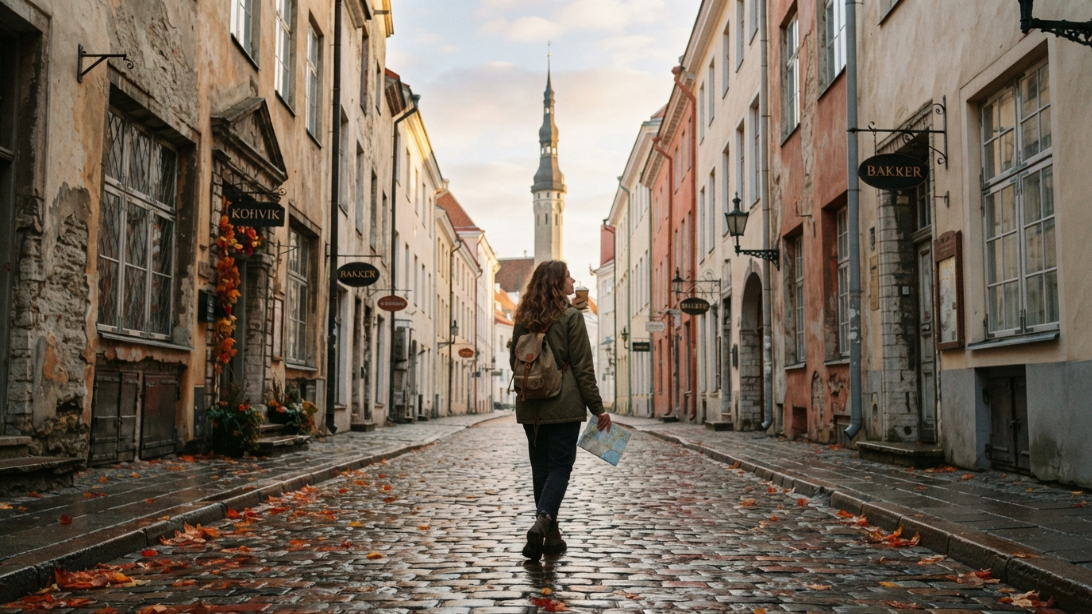
Tallinn possesses one of the best-preserved medieval old towns in Europe and charges some of the lowest prices in the European Union for accommodation, food, and entertainment. The combination produces a student travel experience that delivers visual and historical richness at costs that compare favorably with Eastern European non-EU destinations.
The Toompea Castle and Alexander Nevsky Cathedral are free to visit. The medieval city walls and towers charge $5 to $8 for access to the walkable sections. The Estonian Open Air Museum outside the city charges $12 for student admission and presents a collection of historic Estonian farm buildings relocated from across the country to create a living agricultural history site that is more interesting than its description suggests. A bowl of black bread soup with smoked meat at a traditional Estonian restaurant costs $6 to $9. A pint of local Saku beer costs $2 to $3.
Ryanair and Wizz Air connect Tallinn from London, Berlin, and Stockholm for under €30 one way. The Stockholm to Tallinn ferry run by Tallink Silja Line takes overnight and costs $30 to $60 for a cabin, combining transportation and accommodation in a format that student travelers find both economical and memorable. Hostel beds average $18 to $28 a night in the old town. Riga in Latvia and Vilnius in Lithuania are accessible by bus from Tallinn for $15 to $25, making the Baltic capitals a natural three-city student itinerary with consistent budget-friendly characteristics across all three.
Building the Student Europe Itinerary That Makes Financial Sense
The individual city choices matter, but the routing logic that connects them determines whether the trip is affordable or merely contains affordable cities surrounded by expensive transportation between them.
Pick a single hub city for your transatlantic arrival and departure and build a circular route from it rather than a linear route that requires buying two separate transatlantic tickets or one expensive open-jaw fare. Flying into Lisbon and building a route through Seville, Barcelona if the budget allows, and then looping back through Porto to fly home costs less than flying into Lisbon and home from Tallinn even if the Eastern European cities would theoretically be cheaper on the ground.
Use FlixBus for routes under five hours and Omio to compare train and bus options simultaneously. Book bus tickets at least three to four days in advance because FlixBus pricing increases significantly as the departure date approaches. Travel between cities overnight when the journey takes six or more hours: an overnight bus from Seville to Madrid or a night train from Budapest to Kraków eliminates one night of accommodation cost while moving you between destinations simultaneously, which is the specific travel format that makes European student trips financially elastic in ways that day travel cannot replicate.
Frequently Asked Questions
What are the best affordable European cities for college student travelers who only have two weeks?
Two weeks allows for four to five cities comfortably without feeling rushed. The most logistically efficient and budget-maximizing two-week combinations are Lisbon and Porto together, Kraków and Budapest together, or a Baltic cities route covering Tallinn, Riga, and Vilnius. Each pairing covers cities geographically close enough to travel between cheaply while providing genuinely distinct experiences that justify separate visits rather than feeling like the same place with different architecture.
How much money does a college student realistically need per day in Europe?
In Eastern European cities including Kraków, Budapest, Sarajevo, Brno, and Tbilisi, $40 to $55 per day covers hostel accommodation, all meals at local restaurants, one or two paid attractions, and local transportation. In Southern European cities including Lisbon, Porto, Seville, and Athens, $55 to $70 per day covers the same categories. These figures assume hostel accommodation rather than private rooms, local restaurants rather than tourist-oriented ones, and public transportation rather than taxis.
Is it safe for college students to travel alone in these European cities?
Every city on this list is broadly safe for student travelers applying standard travel awareness. Keep copies of important documents in a separate location from the originals, use money belts for passports and significant cash in crowded tourist areas, stay in hostels with strong recent reviews that indicate a social and attentive environment, and trust your instincts about situations that feel uncomfortable. Solo female travelers specifically find hostel common rooms and organized hostel walking tours effective for meeting travel companions quickly in each new city.
When is the best time of year for a college student European trip?
Late May through mid-June and September through early October represent the optimal windows for budget student travel: weather is reliably good across Southern and Eastern Europe, crowds are meaningfully lower than July and August peak, accommodation prices are 20 to 30 percent below summer peak rates, and the social atmosphere of cities transitions toward local life rather than pure tourist saturation. The spring window aligns with the gap between spring semester finals and summer job start dates that many college students can access with planning.
Should I buy a Eurail pass or book individual tickets?
For most student itineraries spending four or more days in each city and using a combination of trains and buses, individual tickets consistently cost less than a Eurail pass when booked through Omio or directly through national rail websites. The Eurail pass provides value primarily for students covering more than six countries in under three weeks with frequent train travel between them. Run the calculation for your specific itinerary on Omio before purchasing a pass because the math is itinerary-specific and the answer is not always what the Eurail marketing suggests.
Conclusion
Europe on a student budget is not a compromised version of Europe. It is a specific way of experiencing the continent that prioritizes the things that cost little or nothing, the walking, the sitting, the eating, the talking to strangers in hostel common rooms, and the slow accumulation of moments in places that exist entirely on their own terms rather than for the benefit of someone else’s Instagram. The cities on this list reward exactly that approach. Which one is going on your list first?