Finding genuinely useful top winter destinations for budget conscious snow lovers requires cutting through the winter travel content that treats snow travel as synonymous with ski resort travel, which is the most expensive possible format for accessing winter landscapes and the one that prices out the majority of people who genuinely love snow, cold air, and the specific quality of a world that has gone quiet under a white covering. Snow travel on a genuine budget is not about compromising the experience. It is about understanding that the most commercially developed version of any travel experience is rarely the most rewarding one, and that winter landscapes specifically reward the traveler who moves through them slowly and independently rather than the one who purchases access to them through resort infrastructure. Every destination on this list was chosen because it delivers genuine snow experience at daily costs that don’t require a second mortgage.
What Budget Snow Travel Actually Looks Like
Before destinations, establishing what budget snow travel realistically means prevents the frustration of arriving at a winter destination with budget expectations and discovering that the gap between what was anticipated and what things actually cost is wider than the research suggested.
Budget snow travel means something specific and honest that differs from ski resort travel in fundamental ways. It means staying in guesthouses, hostels, or self-catering accommodation rather than slope-side lodges that charge premium rates for proximity to lifts. It means taking public buses and trains to winter landscapes rather than private transfers. It means snowshoeing, cross-country skiing, hiking on packed snow, and visiting winter cultural sites rather than exclusively accessing ski terrain that requires lift passes averaging $80 to $200 per day at most major resorts.
It means eating at local restaurants and preparing some meals rather than dining at resort restaurants where a bowl of soup costs what a full meal costs everywhere else. The specific daily budget range that defines genuinely budget snow travel at the destinations on this list runs from $30 to $80 per day including accommodation, food, local transport, and winter activities, which represents real snow experience at costs that most people with any discretionary income can access with reasonable saving over a few months.
1. Hokkaido, Japan
Hokkaido delivers what is widely considered the finest powder snow on earth, specifically the light, dry, crystalline snow that the combination of cold Siberian air and moisture from the Sea of Japan produces, in a destination that offers both world-class ski terrain and extraordinary non-ski winter experiences at daily costs that remain meaningfully below equivalent Alpine destinations.
Niseko is the name most associated with Hokkaido skiing internationally and represents the premium end of the island’s ski scene with prices that have risen significantly as its international reputation has grown. Furano and Biei in central Hokkaido provide the most budget-conscious entry point to Hokkaido’s winter landscape, with ski terrain that locals consider superior to Niseko’s in certain conditions, accommodation at $40 to $80 per night including breakfast in most cases, and the extraordinary blue pond at Biei that freezes in winter into a landscape of surreal beauty accessible for free.
Sapporo’s Snow Festival in early February is one of the world’s great winter events and entirely free to attend, covering the city’s central Odori Park with monumental ice and snow sculptures that require weeks to construct and that produce a scale of winter spectacle unavailable anywhere else on earth. Daily budget in Hokkaido outside Niseko runs $50 to $80 including accommodation, excellent Japanese food at local restaurants, and public transport on the excellent Hokkaido train network.
2. Serbian Mountains: Kopaonik and Zlatibor
Serbia’s mountain destinations are among the most consistently overlooked budget snow destinations in Europe, providing genuine Alpine skiing, charming mountain village atmosphere, and daily costs that run at approximately one third of equivalent Swiss, Austrian, or French resort experiences.
Kopaonik is Serbia’s largest ski resort and one of the better ski destinations in the Balkans, with 55 kilometers of marked runs, reliable snow conditions through February and March, and lift pass costs of approximately $30 to $40 per day compared to the $80 to $150 that comparable Alpine resorts charge.
Zlatibor in western Serbia provides the most authentically Serbian mountain experience, with traditional wooden architecture, excellent local food including the specific combination of Serbian cheeses, smoked meats, and rakija brandy that makes mountain dining in this region genuinely memorable, and a pace of winter mountain life that feels nothing like the commercial ski resort experience. Accommodation in both destinations runs $20 to $50 per night for clean, comfortable rooms often including breakfast. Daily budget in Serbian mountains runs $35 to $60 including accommodation, excellent local food, and lift passes if skiing, dropping to $25 to $40 for non-ski winter visitors.
3. Lapland, Finland: Beyond the Tourist Packages
Finnish Lapland occupies a specific position on this list as a destination whose packaged tourist version, specifically the Santa Claus Village and organized reindeer safaris marketed primarily to families, costs significantly more than the independent version of the same landscape, which includes the same aurora borealis, the same reindeer, and the same extraordinary Arctic silence at a fraction of the organized price.
Saariselkä rather than the tourist-saturated Rovaniemi is the budget-conscious traveler’s entry point to Finnish Lapland, providing the Arctic wilderness experience with aurora viewing opportunities, snowshoe and cross-country ski trail access, and accommodation at local guesthouses for $50 to $80 per night that is meaningfully more affordable than the themed accommodation packages that dominate Rovaniemi’s market.
The aurora borealis is entirely free to watch from anywhere outside artificial light in Finnish Lapland between September and March, which is the specific detail that makes independent Lapland travel so much more affordable than the organized version, since aurora viewing packages in Rovaniemi add hundreds of euros to the cost of accessing something that requires only patience and a clear sky. Husky sledding, snowshoe hiking, and ice fishing can all be arranged independently or through small local operators at costs well below the major organized tour prices. Daily budget in Saariselkä runs $60 to $90 including accommodation, food from the small local restaurants, and one or two activities booked independently.
4. Transylvania, Romania
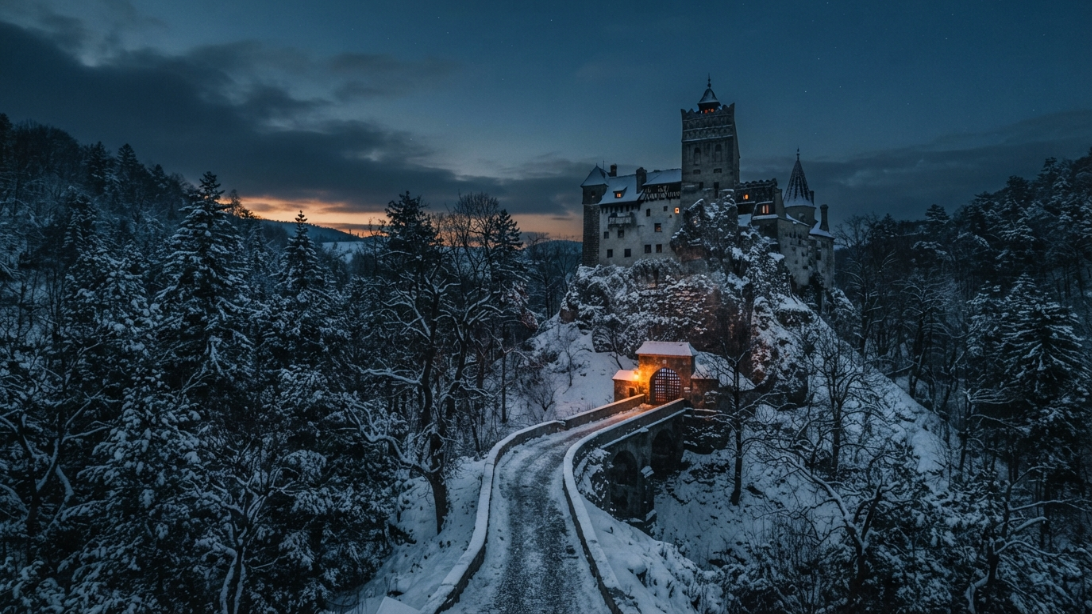
Transylvania provides a winter travel experience that is genuinely unique among the destinations on this list, combining the specific Gothic atmosphere of its medieval fortified churches, castle landscapes, and Saxon village architecture with snow coverage that transforms an already extraordinary landscape into something that feels genuinely cinematic in ways that more visited European winter destinations don’t produce.
Brașov serves as the main base for Transylvanian winter exploration and provides accommodation at $25 to $50 per night, excellent Romanian food including the hearty meat stews and polenta dishes that winter mountain cooking produces in this region, and a medieval city center that snow covers into a landscape that every European medieval fantasy has borrowed from. Bran Castle, associated with the Dracula legend regardless of its actual historical relationship to Vlad the Impaler, sits at its most atmospheric in winter when the crowds that descend in summer are replaced by a small fraction of their number and the castle’s Gothic silhouette rises above snow-covered surroundings without the selfie-stick infrastructure that summer visits navigate.
Sighișoara, the only continuously inhabited medieval citadel in Europe, in winter snow is among the most visually extraordinary towns available in Eastern Europe at any season. Daily budget in Transylvania runs $30 to $50 including accommodation, food, transport, and attraction entry fees that are consistently lower than Western European equivalents.
5. Hokuriku Region, Japan: Alternative to Hokkaido
Japan’s Hokuriku region on the Sea of Japan coast of Honshu island receives some of the heaviest snowfall of any inhabited region on earth, producing winter landscapes of extraordinary depth and beauty in a cultural context that includes traditional wooden architecture buried to its eaves in snow, sake breweries operating through winter in conditions that produce their finest seasonal batches, and the specific phenomenon of snow-covered Japanese temple and shrine landscapes that photographs worldwide but that relatively few international travelers actually visit.
Shirakawa-go and Gokayama, two UNESCO-listed villages of traditional gassho-zukuri farmhouses with steeply pitched thatched roofs designed specifically to shed the region’s extraordinary snowfall, are among the most visually extraordinary winter landscapes in Japan and accessible by public bus from Kanazawa or Takayama for a few dollars.
Kanazawa itself is one of Japan’s most rewarding secondary cities, with the Kenroku-en garden transforming in winter under the yukitsuri rope supports that protect its ancient trees from snow damage into a landscape that has no direct equivalent anywhere else. Myoko and Nozawa Onsen provide excellent skiing with authentic Japanese onsen hot spring culture at daily costs running $40 to $70 including accommodation at traditional ryokans, meals, and lift passes that cost less than half their Hokkaido equivalents.
6. Bulgarian Ski Resorts: Bansko and Borovets
Bulgaria has established itself as Europe’s most compelling budget ski destination over the past decade, combining genuine Alpine terrain, reliable snow conditions, and resort infrastructure that rivals many Western European equivalents at a cost that makes a week of skiing in Bulgaria achievable for the price of two or three days at comparable French or Swiss resorts.
Bansko is Bulgaria’s flagship ski resort and one of Europe’s most affordable genuine ski destinations, with lift passes at $25 to $35 per day, ski rental at $15 to $20 per day, and accommodation ranging from $20 hostel beds to comfortable hotel rooms at $40 to $70 per night that would cost three to four times as much in comparable Alpine locations.
The Bansko old town with its traditional mehanas, the Bulgarian taverns serving slow-cooked meat dishes and local wine by the clay carafe, provides the après-ski cultural experience that makes Bulgaria more interesting than the pure skiing destination its prices might suggest. Borovets near Sofia is smaller and less developed than Bansko but provides easy day-trip access from the capital for non-ski winter visitors who want mountain snow experience without committing to a full resort stay. Daily budget at Bansko runs $40 to $70 for skiers including accommodation, meals, and lift pass, dropping to $25 to $45 for non-ski winter visitors enjoying the mountain environment.
7. Tromsø, Norway: Arctic Adventure Without the Package Price
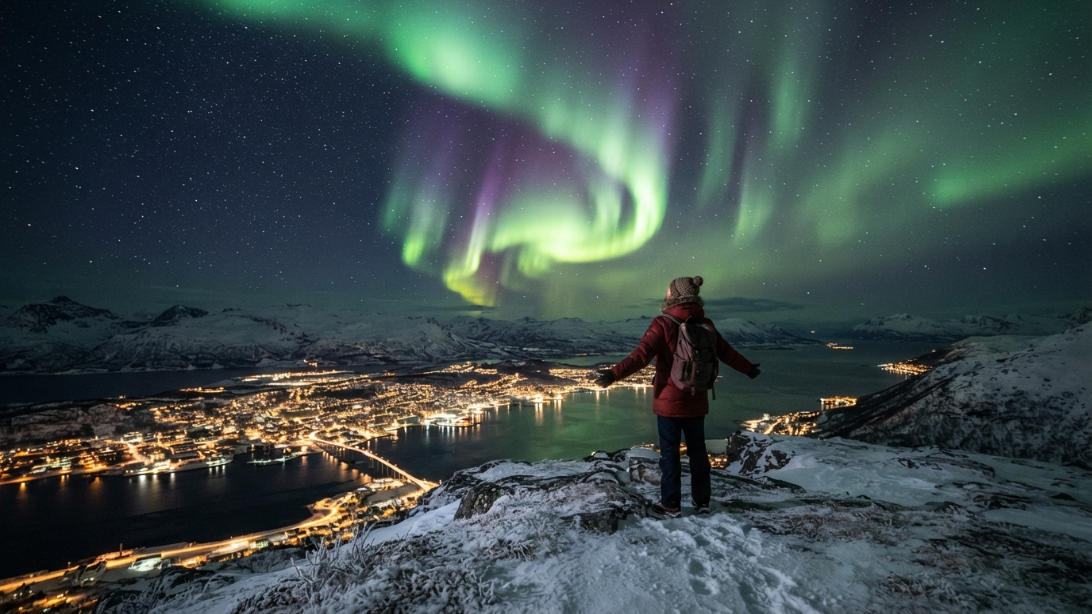
Tromsø in northern Norway sits at 69 degrees north latitude, well above the Arctic Circle, and provides the most accessible genuine Arctic winter experience available in Europe, including the northern lights, dog sledding, reindeer encounters, and the specific phenomenon of polar night when the sun doesn’t rise above the horizon for weeks, at costs that are genuinely high by global standards but modest by Norwegian standards and significantly below the packaged Arctic experience that tour operators sell at multiples of the independent travel cost.
The northern lights over Tromsø are entirely free to watch from any dark location outside the city, which within Tromsø requires only a fifteen-minute drive or a cable car ride to the mountain above the city at approximately $20 round trip. The Aurora Forecast app and SpaceWeather.com both provide the Kp index predictions that tell you which nights are worth staying awake for without paying for organized aurora tours that charge $80 to $150 for access to the same sky that a dark hillside provides at no cost.
Dog sledding and reindeer sleigh experiences can be arranged through small local operators at $80 to $150 rather than the $200 to $400 that major organized tour packages charge for the identical experience. Accommodation in Tromsø runs $50 to $100 per night for guesthouses and budget hotels, with Airbnb options at the lower end of this range. Daily budget in Tromsø runs $80 to $120, which is high by the standards of other destinations on this list but represents genuine value for the Arctic experience it provides.
8. Kraków, Poland: Winter City Base for Mountain Day Trips
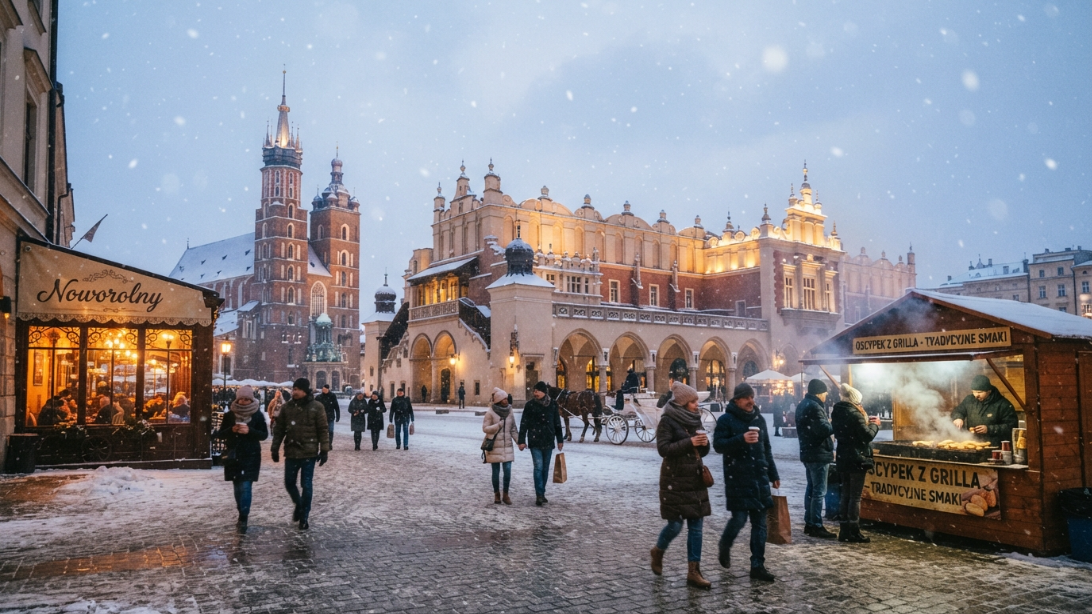
Kraków in winter is one of Europe’s most underrated city destinations, combining extraordinary medieval architecture, one of the continent’s most vibrant food and social cultures, and outstanding value for money with proximity to the Tatra Mountains that allows day trips to genuine mountain snow landscapes from an affordable urban base.
The Tatra Mountains accessible by direct bus from Kraków in approximately two hours provide free snowshoe and hiking access to mountain terrain that in other Alpine contexts would cost significantly more to access, with the Morskie Oko lake hiking trail providing a genuinely spectacular mountain lake landscape even in deep winter when the lake is frozen and the surrounding peaks are snow-covered.
Zakopane, the mountain town at the Tatras’ base, provides skiing at lift pass costs of $20 to $30 per day and a traditional highland culture including the specific oscypek smoked sheep’s cheese grilled at market stalls and served with cranberry jam that is one of the more genuinely excellent and genuinely inexpensive foods available at any ski destination anywhere. Kraków itself in winter provides accommodation at $15 to $40 per night in well-reviewed hostels and budget hotels, excellent Polish food at costs that feel almost implausibly low for the quality produced, and the extraordinary Wawel Royal Castle and Kazimierz Jewish quarter winter atmosphere without the summer crowds. Daily budget in Kraków runs $30 to $50 including accommodation, food, and activities.
9. Quebec City, Canada: North American Winter Festival
Quebec City in winter is the North American destination that delivers the most complete and most genuinely celebratory winter culture available on the continent, specifically through the Winter Carnival, the largest winter festival in the world, which transforms the already extraordinary walled city into a celebration of snow and cold that treats winter as a gift rather than an endurance test.
The Quebec Winter Carnival runs for seventeen days in late January and early February and includes free outdoor activities including ice canoe racing across the St. Lawrence River, snow sculpture competitions on the Plains of Abraham, and the famous Ice Palace constructed annually from massive ice blocks cut from the St. Lawrence.
The Château Frontenac toboggan slide, one of the carnival’s iconic activities, is free with the carnival wristband that costs approximately $20 for full festival access. Old Quebec City within its UNESCO-listed fortification walls in winter snow is one of the most visually extraordinary urban winter environments in North America, with the narrow stone streets, the horse-drawn calèche carriages, and the specific quality of cold clear winter air at minus twenty degrees that makes the mulled wine at every corner feel genuinely necessary rather than merely pleasant. Daily budget in Quebec City runs $60 to $90 including accommodation at budget hotels or Airbnb, excellent French-Canadian food at the many affordable local restaurants, and carnival activities.
10. Karakol, Kyrgyzstan: Central Asian Winter Adventure
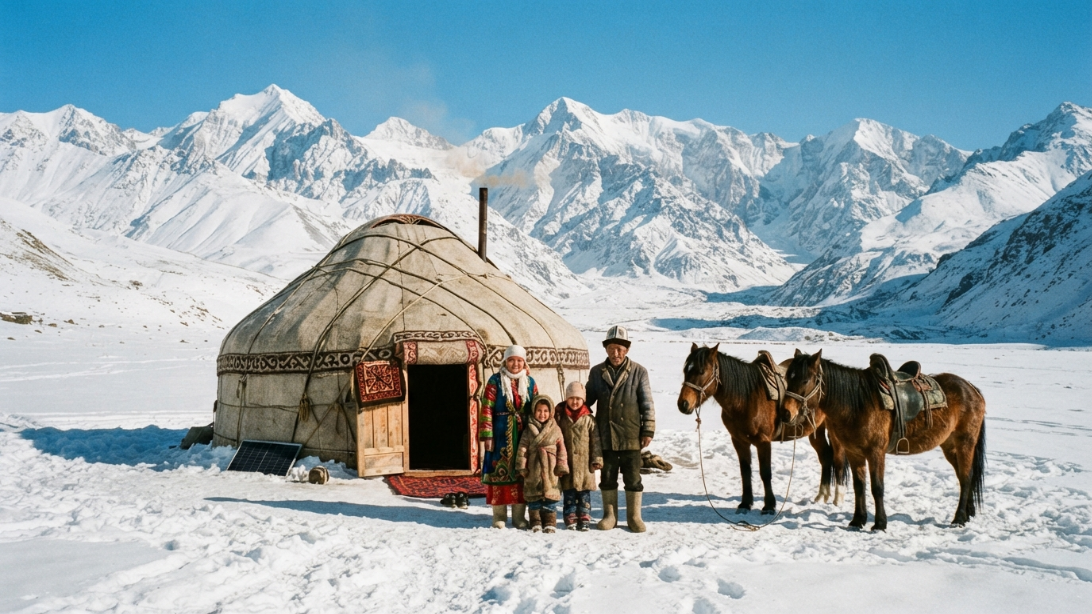
Karakol in the Kyrgyz Tian Shan mountains represents the most genuinely adventurous destination on this list and the one with the widest gap between the experience it delivers and the price it charges for delivering it, specifically because Central Asian winter travel remains far enough outside mainstream tourism that the pricing infrastructure that extracts maximum value from winter travelers in Europe and North America simply hasn’t developed.
Karakol Ski Base provides access to 22 kilometers of ski runs at lift pass costs of approximately $15 to $25 per day and ski rental at $10 to $15 per day, which makes it the most affordable lift-served skiing on this list by a significant margin. The skiing quality, while not at the level of the world’s major resorts in terms of grooming and variety, occurs in mountain terrain of genuine beauty with frequent powder conditions and virtually no lift queues even during the busiest periods.
Beyond skiing, the Tian Shan winter landscape accessible from Karakol by horse or snowmobile through local operators produces genuinely wild mountain experience at costs that are a fraction of equivalent guided experiences in more developed mountain destinations. Yurt accommodation at traditional Kyrgyz homestays costs $15 to $25 per night including meals, which are the extraordinary Central Asian winter hospitality spreads of beshbarmak, samsa, and fresh bread that make eating in Kyrgyzstan one of the most genuine cultural experiences available in budget travel regardless of season. Daily budget in Karakol runs $25 to $45 including accommodation, meals, and ski pass.
Practical Budget Snow Travel Strategies
Beyond destination selection, several specific strategies consistently reduce costs across all winter travel destinations.
Traveling in late season, specifically February and March rather than December and January, reduces accommodation costs by twenty to forty percent at most snow destinations while typically maintaining good snow conditions and occasionally providing better weather than the darker early winter months.
Booking accommodation midweek rather than for weekend arrival reduces rates at ski-adjacent accommodation where weekend demand consistently drives pricing above midweek levels. Renting ski equipment from town rental shops rather than slope-side rental outlets produces savings of twenty to forty percent for identical equipment because slope-side convenience carries a premium that town shops don’t charge. Cross-country skiing and snowshoeing provide the most affordable mechanically-assisted snow experience at most destinations, with equipment rental at $10 to $20 per day and trail access that is either free or costs a fraction of downhill lift pass prices.
Frequently Asked Questions
What are the most affordable ski destinations in Europe for budget snow lovers?
Bulgaria’s Bansko, Serbia’s Kopaonik, and Romania’s Poiana Brasov consistently offer the lowest combination of lift pass costs, accommodation, and food expenses among European ski destinations with genuine skiing terrain. Daily skiing budgets at all three run $40 to $70 compared to $150 to $250 at comparable French, Swiss, and Austrian resorts. Slovakia’s Jasná and Slovenia’s Kranjska Gora provide slightly higher but still very competitive pricing with arguably more polished resort infrastructure.
Can you experience genuine winter snow landscapes without skiing at all?
Absolutely, and many of the destinations on this list are specifically more rewarding for non-ski winter visitors than for skiers because their winter appeal goes well beyond skiing terrain. Hokkaido’s snow festivals and onsen culture, Transylvania’s Gothic winter landscapes, Quebec City’s Winter Carnival, Lapland’s aurora and Arctic wilderness, and Japan’s Hokuriku region’s snow-buried traditional villages all deliver extraordinary winter experiences that require no skiing equipment or ability.
What is the best time of year to visit budget snow destinations?
Late January through March hits the sweet spot for most Northern Hemisphere snow destinations, combining reliable snow coverage with the price reductions that post-New Year demand drops produce. February specifically combines good snow conditions with accommodation availability and reasonable pricing at most European mountain destinations. Japan’s powder snow is at its best from late January through February. Lapland’s aurora viewing is excellent from October through March with February and March additionally providing more daylight for daytime activities than the deep polar night of December and January.
How do budget snow travelers handle the cold weather gear requirements?
Borrowing or renting cold weather gear rather than purchasing it for a single trip is the budget approach that makes the most financial sense for travelers who don’t already own appropriate winter clothing. Most ski resort towns have rental options for full ski gear including clothing. Layering owned clothing including thermal underlayers, a mid-layer fleece, and a windproof outer layer covers most winter destination temperature ranges without purchasing specialist cold weather gear. Thrift stores in the traveler’s home city before departure frequently provide adequate cold weather clothing at a fraction of specialist outdoor retail prices.
What travel insurance do winter adventure travelers need?
Winter travel insurance specifically needs to cover the activities planned, because standard policies frequently exclude skiing and other winter sports activities. Medical evacuation coverage is specifically important for mountain destinations where rescue can be expensive. Trip cancellation coverage protects against weather-related disruptions that are specifically common in winter travel. World Nomads covers winter sports activities and is the most commonly recommended option among adventure travelers for winter destinations. Read the specific activity exclusions carefully before purchasing any policy.
Conclusion
Winter landscapes are among the most genuinely beautiful and most genuinely affordable travel experiences available when the ski resort is understood as one format for accessing them rather than the only one, and the destinations on this list prove that the snow itself doesn’t care whether you paid resort prices to reach it or arrived by public bus for three dollars. The cold, the quiet, the particular light of winter afternoons, and the specific pleasure of being warm inside while snow falls outside are all free. Which destination on this list has the snow experience you’ve been waiting for?