The best offbeat destinations for travelers avoiding tourist crowds share a quality that is increasingly difficult to find in an era when every remarkable place gets discovered, photographed, hashtagged, and queued for within a single viral cycle. They feel like somewhere rather than something. Not a backdrop for content. Not a landmark to check off. Somewhere with its own rhythm, its own indifference to your arrival, and its own rewards that reveal themselves only to people willing to look beyond the algorithm’s top ten. I have spent years chasing this feeling across places that most travel guides either ignore entirely or mention in a single dismissive sentence, and what I found consistently surprised me in ways that the famous places stopped doing years ago.
Why Crowd Avoidance Has Become a Genuine Travel Priority
Overtourism is not a complaint lodged by travel snobs who miss the days when they had places to themselves. It is a documented phenomenon with measurable consequences for destinations, local communities, and the quality of the travel experience itself.
Venice limits day visitors to €5 entry fees on peak days and caps cruise ship access because the volume of tourism has made daily life for residents genuinely untenable. The Amalfi Coast closes roads to private vehicles in summer because the infrastructure cannot absorb the traffic that Instagram popularity generates. Machu Picchu limits daily visitors to 4,500 and requires timed entry tickets booked months in advance. The Cinque Terre villages have considered resident-only access to certain areas during peak months. These are not temporary inconveniences. They are structural responses to a volume of interest that the physical places cannot absorb without damage to themselves.
The practical result for travelers who arrive at these places expecting a meaningful experience is frequently disappointment measured in crowds, queues, and the specific hollowness of standing in a famous location surrounded by thousands of other people having the same manufactured experience simultaneously. The offbeat destinations below offer something genuinely different: places where the infrastructure exists to support visitors without being overwhelmed by them, where local culture remains intact rather than performed for tourist consumption, and where the experience of being there feels earned rather than purchased.
1. Faroe Islands, Denmark
The Faroe Islands sit in the North Atlantic between Iceland and Norway, an archipelago of eighteen islands that looks like someone took the most dramatic landscape elements from Irish coastlines, Scottish highlands, and Norwegian fjords and compressed them into a territory roughly the size of Singapore. The total population is 55,000 people. The annual visitor count is around 120,000, which sounds significant until you compare it to Iceland’s two million annual visitors for a territory of similar scale and comparable landscape drama.
Sørvágsvatn Lake produces one of the most genuinely disorienting optical illusions in natural geography: photographed from a specific clifftop position, the lake appears to float above the ocean, an effect of perspective and elevation that photographs capture accurately but that standing there in person still makes you doubt your own spatial reasoning. Gásadalur village sits in a valley accessible only by a tunnel completed in 2004, and the waterfall that drops directly into the ocean at its edge was the first image of the Faroe Islands that made most people aware the islands existed.
Accommodation ranges from guesthouses charging $80 to $150 a night to Airbnb turf-roof cottages that provide the specific experience of sleeping under grass-covered roofs in a landscape where that architectural choice made survival sense for centuries. Atlantic Airways connects the Faroe Islands from Copenhagen, Reykjavik, and several other European cities. Puffins nest in the cliffsides from May through August and can be approached within arm’s length on certain coastal paths where they have no natural predators and therefore no instinctive fear of humans, which produces encounters that wildlife photographers describe as among the most accessible in the world.
2. Svalbard, Norway
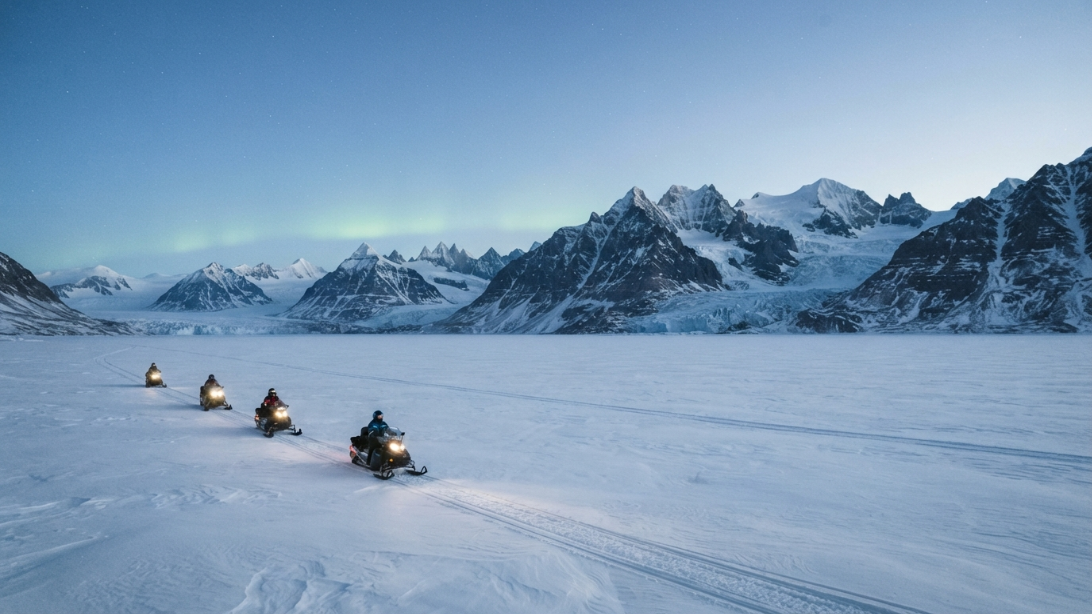
Svalbard is technically the northernmost permanently inhabited place on earth, a Norwegian archipelago at 78 degrees north latitude where polar bears outnumber humans, where the sun does not set for four months and does not rise for another four, and where the landscape looks like what you would get if you asked someone to design a planet that communicated the word wilderness without any ambiguity.
The main settlement of Longyearbyen has a population of 2,300 people and functions as the base for expeditions into the surrounding wilderness. It has restaurants, a university, a museum, and infrastructure that makes it genuinely comfortable while being extraordinarily remote. You cannot leave town without a guide and a firearm or flare gun due to polar bear presence, which is the specific regulation that clarifies the difference between a remote destination and a dangerous one and forces a guided experience that most independent travelers initially resist and subsequently appreciate.
Guided snowmobile expeditions across the frozen fjords in winter, dog sled tours in February and March when daylight begins returning, and boat expeditions to glacier fronts and walrus colonies in summer all provide wildlife and landscape encounters that no managed tourist attraction can replicate. The northern lights appear from late September through March in conditions that the absence of light pollution at 78 degrees north makes more consistently dramatic than lower-latitude alternatives. Norwegian Air and SAS connect Longyearbyen from Oslo year-round, making access logistically straightforward despite the geographic extremity.
3. Albania
Albania is the Mediterranean country that overtourism completely skipped and that travelers who find it describe with a specific evangelical enthusiasm that suggests they half want to share it and half want to keep it entirely to themselves. It has the Albanian Riviera coastline, Ottoman old towns, Byzantine monasteries, communist-era bunkers scattered across the landscape like a surrealist art installation, and daily costs that make it the most affordable country in Europe by most measures.
Berat, the city of a thousand windows, earned its UNESCO designation through a historic center of Ottoman-era white houses stacked up a hillside with identical proportioned windows that create a visual rhythm both geometric and organic. Gjirokastër is its equally UNESCO-listed sister city in the south, a fortress town of grey stone that looks like it was designed for a historical drama rather than having simply evolved over five centuries of continuous habitation. Ksamil, on the Albanian Riviera, has beach water of a clarity and color that Santorini charges $800 a night to be adjacent to, at accommodation costs of $40 to $80 a night.
A full meal at a traditional qebaptore costs $5 to $8. A local beer costs $1 to $1.50. A guesthouse room in Berat or Gjirokastër runs $25 to $50 a night. FlixBus connects Albania from Greece, North Macedonia, and Kosovo. Wizz Air flies into Tirana from London, Rome, and a dozen other European cities. The country adopted the Euro informally alongside the Albanian lek, making transactions straightforward for European visitors. The visa situation is generous: most Western passport holders can stay thirty days without application and many can stay ninety days, though this should be verified for your specific passport before travel.
Best Offbeat Destinations for Travelers Avoiding Tourist Crowds in Asia
Asia’s most famous destinations absorb visitor volumes that have transformed them into experiences primarily defined by crowd management. These alternatives provide equivalent or superior cultural and landscape richness at a fraction of the visitor density.
Nagaland, India
Nagaland sits in the far northeast of India, bordered by Myanmar to the east, in a region that requires a special permit for foreign visitors that most travelers never bother to obtain and that therefore keeps the state in a genuinely pre-mass-tourism state that the rest of India lost decades ago.
The Hornbill Festival in December brings together all sixteen major Naga tribes for ten days of traditional music, dance, food, and cultural display in Kohima that constitutes one of the most extraordinary cultural events in Asia and draws perhaps five to ten thousand international visitors compared to the hundreds of thousands who attend comparable cultural festivals in better-known Indian destinations. The Dzükou Valley on the Nagaland-Manipur border provides trekking through lily-covered valleys at elevations of 2,400 meters that local guides and occasional adventurous trekkers describe as among the most beautiful high-altitude landscapes in South Asia without the crowds of comparable Himalayan destinations.
The Inner Line Permit required for foreign visitors costs approximately $20 and is obtainable online or at entry points. Most visitors combine Nagaland with other northeast Indian states including Meghalaya, known for its living root bridges grown from rubber trees over centuries, and Arunachal Pradesh, which requires an additional permit and provides Tibetan Buddhist monastery culture in a landscape that borders Tibet itself.
Kyushu, Japan
Japan’s fourth largest island sits in the shadow of the Honshu destinations, specifically Kyoto, Tokyo, and Osaka, that absorb the overwhelming majority of Japan’s international visitors. Kyushu receives a fraction of this traffic despite containing a density of remarkable destinations that would make it the primary destination in any country less comprehensively interesting than Japan.
Yakushima Island off the southern tip of Kyushu contains cedar trees that are three to seven thousand years old and are widely believed to have inspired the forest imagery in Hayao Miyazaki’s Princess Mononoke. Walking through the ancient forest in morning mist with moss covering every surface and roots the diameter of cars crossing the trail produces a specific quality of awe that the managed tourist experiences of more famous destinations rarely generate. Beppu contains more geothermal hot springs than any city in Japan and provides an onsen culture experience without the visitor volumes that have made Kyoto’s public bath culture feel performative. Nagasaki’s historical weight and architectural beauty make it one of Japan’s most profound cities to spend time in, and it receives a fraction of the visitors that Hiroshima draws despite an equally significant and moving historical narrative.
4. Oman
Oman is the Gulf state that did everything right and told nobody about it. While Dubai became the region’s internationally marketed spectacle and Saudi Arabia is currently positioning itself for mass tourism development, Oman spent decades investing in infrastructure, environmental protection, and cultural preservation that produced a destination of extraordinary quality for the category of traveler who finds spectacle less interesting than substance.
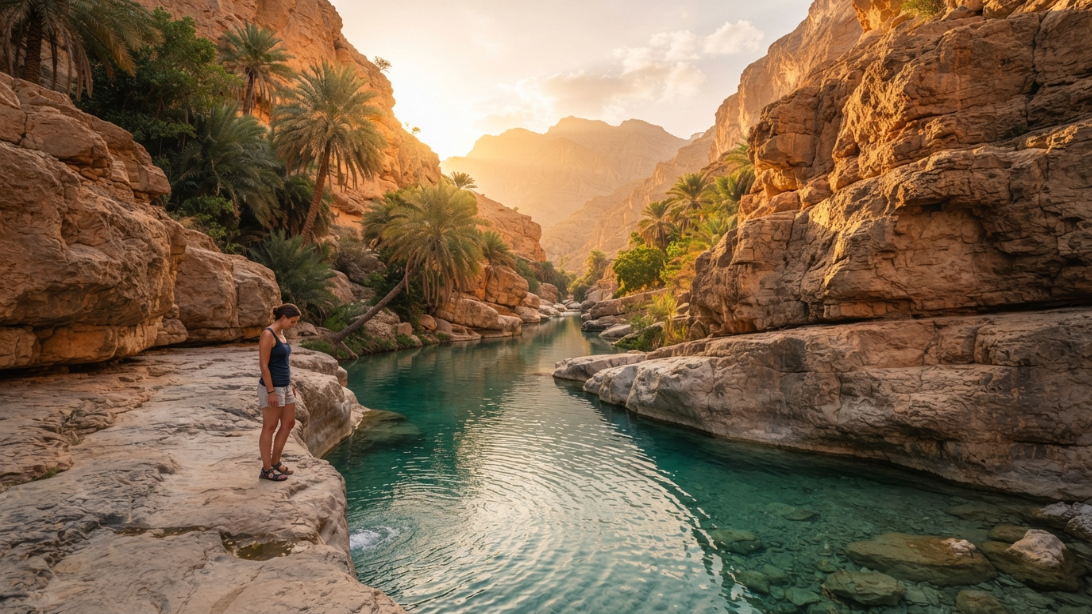
The Hajar Mountains provide a dramatic escarpment rising from the Gulf of Oman coast to over 3,000 meters in terrain that contains ancient aflaj irrigation systems still in use, traditional villages where mud-brick architecture has been maintained rather than replaced, and a wadi network of seasonal rivers that carve through canyon landscapes. Wadi Shab is the most visited, which means it receives perhaps five hundred visitors on a busy day rather than the fifty thousand that a comparable natural attraction in a more marketed destination would absorb. Wadi Bani Khalid has clear pools for swimming that photograph as too beautiful to be real, and on most days you can have a significant portion of it entirely to yourself.
Wahiba Sands, the desert that covers a significant portion of central Oman, provides dune camping experiences that the more famous Sahara destinations in Morocco have converted into managed tourist productions. In Oman, a small camp operator with genuine desert expertise and a vehicle adapted for sand driving provides access that feels like wilderness rather than tourism. Muscat as a capital city has the specific quality of being genuinely pleasant rather than merely impressive, with a corniche that functions as a public social space rather than a tourist attraction, a souq that sells things Omanis actually buy, and a warmth in human interaction that travelers consistently describe as the most memorable quality of the entire destination.
5. Georgia, the Country
Georgia the country rather than the US state deserves its position on this list for the specific reason that it packs an implausible density of remarkable things into a territory slightly smaller than Ireland while remaining genuinely unknown to the majority of international travelers who would absolutely love it if they went.
Svaneti in the northwestern highlands is a medieval tower house culture preserved in a high mountain valley that has been physically isolated enough by its geography to maintain an architectural and cultural character that exists nowhere else on earth. Hundreds of defensive towers built between the ninth and twelfth centuries still stand in the villages of Mestia and Ushguli, the latter being one of the highest permanently inhabited settlements in Europe at 2,200 meters. Trekking between Svan villages through alpine meadows and glacial moraines is accessible to anyone with reasonable fitness and a guide, and the entire Svaneti experience receives perhaps thirty thousand international visitors annually compared to the millions who visit the Alpine walking circuits of Switzerland and Austria for a broadly comparable landscape category.
Kakheti, the wine region east of Tbilisi, produces wine using a method eight thousand years old that is recognized by UNESCO as an intangible cultural heritage. Qvevri wine, fermented in large clay vessels buried underground with extended skin contact, produces amber-colored wines with tannins and complexity unlike anything produced anywhere else. Visiting family wineries that have been producing wine since before most European wine regions were established, tasting directly from the qvevri, and eating a Georgian feast of local cheeses, walnuts, herbs, and roasted meats in a farmhouse courtyard is the specific experience that causes travelers who have been to Georgia to recommend it more insistently than almost any other destination they have visited.
6. Mozambique
Mozambique has three thousand kilometers of Indian Ocean coastline, offshore coral reef ecosystems in the Quirimbas Archipelago and around the Bazaruto Archipelago that marine biologists rank among the healthiest remaining reef systems in the world, and an annual international visitor count of roughly one million people, which for context is approximately what Thailand receives every nine to ten days.
Tofo Beach is the town that experienced travelers who found it describe as what Koh Samui was before Koh Samui became Koh Samui, a genuinely local coastal community with surf, excellent diving, whale shark aggregations that make it one of the most reliable whale shark encounter sites globally, and accommodation ranging from backpacker hostels at $15 a night to small lodge operations at $80 to $120 a night. The diving here specifically draws marine biologists and underwater photographers who describe the manta ray and whale shark encounters as the most reliably extraordinary wildlife diving available anywhere in the world outside of the most remote Pacific atolls.
Ilha de Moçambique, the island that gives the country its name, is a UNESCO World Heritage Site of extraordinary historical complexity: Portuguese colonial architecture layered over Arab trading port foundations layered over even earlier settlement, all compressed into an island three kilometers long and 500 meters wide that has been continuously inhabited and historically significant for over five hundred years. The island receives perhaps twenty to thirty thousand international visitors annually, which is the category of visitor volume where you encounter other travelers occasionally rather than constantly.
7. Kyrgyzstan
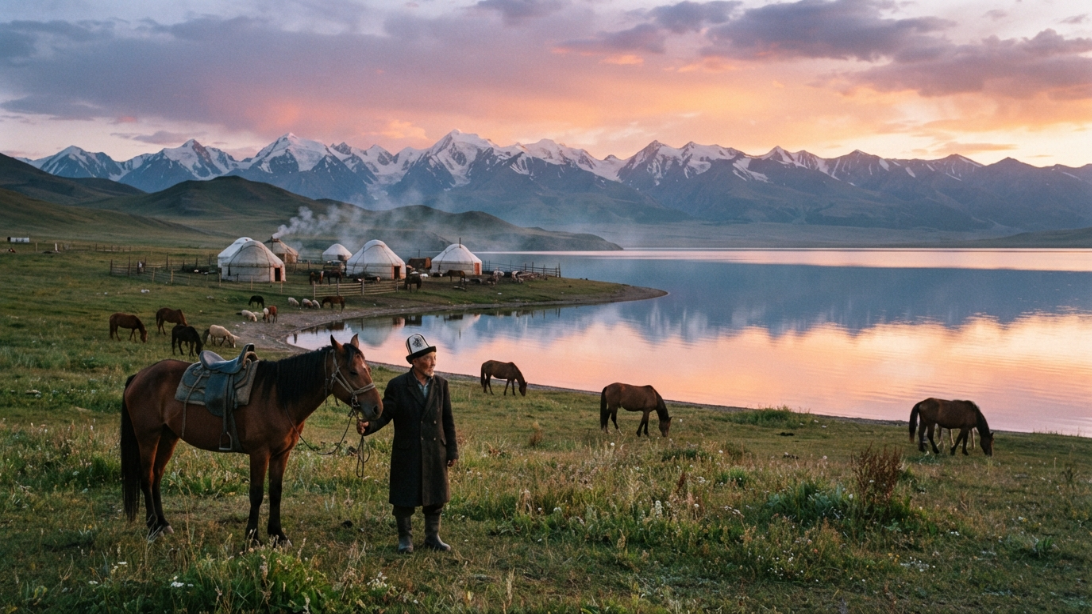
Kyrgyzstan is a Central Asian country of 6.5 million people, 94 percent mountains, and an annual international visitor count that hovers around one million despite possessing high-altitude landscapes that rival anything the Swiss Alps or the Himalayas offer at prices that make equivalent Alpine experiences look dishonest by comparison.
Song-Kul Lake sits at 3,016 meters above sea level in a caldera surrounded by summer pastures where Kyrgyz herders bring their animals from June to September. Staying in a yurt camp on the lakeshore, waking to horses grazing outside, eating fermented mare’s milk and lamb stew cooked over a dung fire, and sleeping under Milky Way visibility of a clarity that lowland travelers genuinely struggle to comprehend is not a manufactured experience. It is simply what this place is, and the absence of infrastructure between it and the genuine nomadic culture it represents is a function of authentic geography rather than a curated authenticity that a tour operator designed.
The Tian Shan mountain range provides multi-day trekking through valleys that do not appear on most Western hiking community’s radar because the marketing infrastructure that creates trekking reputation elsewhere does not exist here. The Community Based Tourism network in Kyrgyzstan, developed specifically to channel visitor spending directly to rural communities rather than through intermediary tourism businesses, operates guest houses, horse trekking, and guide services across the country at prices of $20 to $40 per day all-in for accommodation, meals, and horse with guide, which makes extended mountain travel in Kyrgyzstan among the most affordable equivalent experiences available anywhere.
8. Suriname
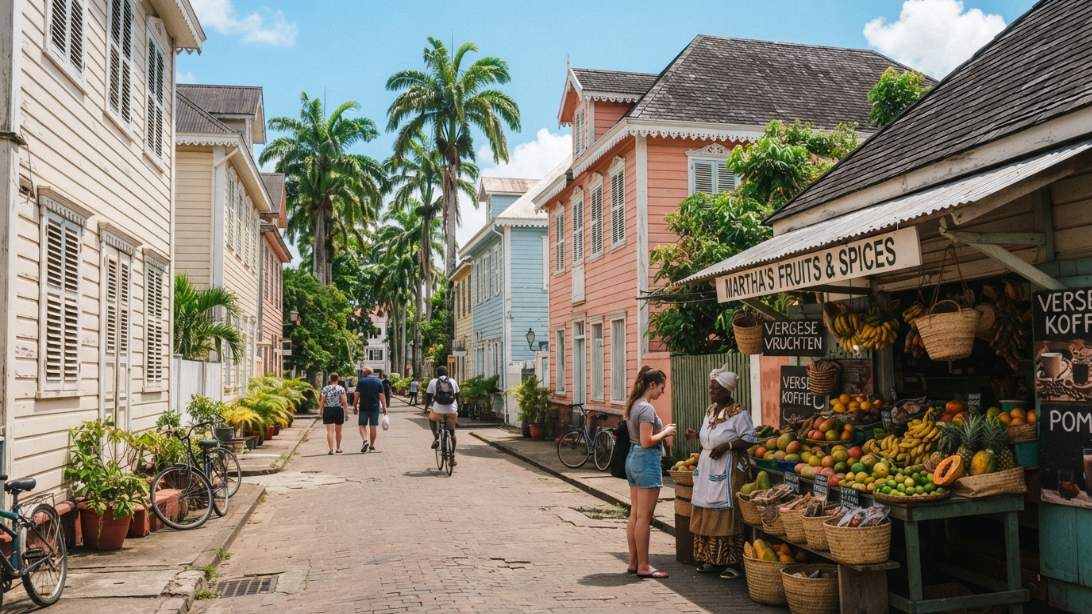
Suriname is a South American country of 600,000 people, 90 percent rainforest, and an annual international visitor count so low that most tourism statistics group it with neighboring countries to produce a meaningful figure. It is the smallest country in South America, shares the Amazon basin with Brazil and Guyana, and contains a cultural complexity that its size does not suggest: Dutch colonial architecture in the UNESCO-listed capital of Paramaribo, a population of Maroon communities descended from escaped enslaved people who established autonomous settlements deep in the interior jungle, Javanese and Hindustani communities from nineteenth century Dutch colonial labor migration, and indigenous Amerindian groups with continuous forest habitation.
Paramaribo’s historic center is a genuine UNESCO listing, not a polished heritage zone but a working city of wooden colonial buildings in various states of preservation that feel lived-in rather than curated. The market near the waterfront sells products from multiple cultural traditions simultaneously in the specific way that only genuinely multicultural cities produce. Interior jungle lodges accessible by small aircraft or multi-day river journey provide rainforest immersion experiences that the more developed Amazon tourism infrastructure in Brazil and Peru has made significantly more accessible and therefore significantly less wild.
Brownsberg Nature Reserve is accessible by road from Paramaribo, which makes it the interior destination that casual visitors reach, and it provides primary rainforest hiking, night walks with headlamps revealing the nocturnal species that daytime visitors never encounter, and a population of Maroon guides whose knowledge of the forest is the kind that takes generations to accumulate. Total visitors to Brownsberg on a busy weekend: perhaps one hundred. Total visitors to a comparable Amazon destination in Brazil on a busy weekend: potentially several thousand.
9. Somaliland
Somaliland occupies a category of its own in offbeat travel because it is not merely uncrowded but genuinely unrecognized: a self-declared republic that has operated as a de facto independent state since 1991 with its own government, currency, military, and passport, without recognition from any United Nations member state including neighboring countries.
This status means it receives perhaps five thousand international visitors annually, which makes it the least-visited stable destination in the world by most measures. The specific experience this produces is one of complete genuineness: there is no tourist infrastructure because there is no tourist volume that would justify one. The people who interact with visitors do so from genuine curiosity rather than commercial motivation. The Laas Geel cave paintings, rock art estimated to be ten thousand years old depicting domesticated cattle and human figures in extraordinary condition and color preservation, are comparable in quality and significance to the most famous prehistoric art sites in Europe and receive perhaps a few hundred visitors annually because of Somaliland’s absence from international travel consciousness.
Hargeisa, the capital, functions as a genuinely functioning city that happens to receive almost no foreign visitors, which produces the specific disorientation of being conspicuous not because you are at a tourist attraction but because foreign visitors are genuinely rare. The visa on arrival system costs $30 and is available to most Western passport holders, though confirming current requirements through recent traveler reports rather than official sources is advisable given the fluid nature of policy in an unrecognized state.
How to Find Offbeat Destinations Before They Stop Being Offbeat
The discovery cycle for previously unknown destinations has accelerated dramatically in the social media era, compressing the window between genuine obscurity and mainstream overcrowding from decades to years in some cases. Tracking ahead of this cycle requires slightly different information sources than standard travel planning.
Nomad List community forums and TripAdvisor forums for specific countries rather than specific attractions surface honest current visitor volume information from people who have recently been there. Atlas Obscura catalogs genuinely unusual and overlooked places globally with enough specificity to identify destinations rather than just curiosities. Academic and scientific publications about specific archaeological sites, ecological areas, and cultural heritage regions often describe places of extraordinary significance that have not yet been processed by the travel media machinery that converts significance into tourism. The UNESCO Tentative Lists, the inventory of sites nominated for World Heritage consideration but not yet inscribed, identify places of confirmed outstanding value that have not yet received the visitor infrastructure and marketing that follows inscription.
Following travel writers and photographers who specifically cover non-mainstream destinations rather than the algorithmic content creators whose incentives align with popular rather than interesting produces a genuinely different information stream. Robert Young Pelton’s work on dangerous and overlooked destinations, Rolf Potts on slow and immersive travel, and specific regional travel writing communities in languages other than English all provide access to destination information that the English-language mainstream travel media is not yet processing.
Frequently Asked Questions
What are the best offbeat destinations for travelers avoiding tourist crowds who still want good infrastructure?
Oman, Georgia the country, and Kyushu Japan all provide well-developed tourism infrastructure including reliable accommodation booking, good transport connections, and English-language accessibility while receiving a fraction of the visitors that comparable quality destinations in their regions absorb. All three are accessible without significant logistical complexity and provide experiences that justify the journey without requiring expedition-level preparation.
How do I know if a destination is genuinely uncrowded or just marketed as offbeat?
Check visitor statistics from national tourism boards and compare them with destinations you know are crowded. A country receiving under 500,000 international visitors annually is genuinely uncrowded regardless of how its individual attractions feel during peak season. Read recent traveler reports on forums rather than travel publications, which often describe destinations as hidden gems years after they have become mainstream. The presence of multiple international tour operators offering packaged tours to a destination is a reliable indicator that the uncrowded window has closed or is closing.
Is it safe to travel to genuinely offbeat and unknown destinations?
Safety varies enormously between destinations and cannot be generalized across the offbeat category. Svalbard is among the safest places on earth despite being extraordinarily remote. Somaliland is stable but requires specific preparation and ideally a local contact. The Foreign Commonwealth and Development Office travel advisories for UK travelers and the US State Department travel advisories provide current safety assessments that should be consulted for any genuinely unfamiliar destination before booking. Recent traveler reports on specialized forums provide on-the-ground current safety context that official advisories sometimes lag.
Do offbeat destinations cost more because of their remoteness?
Sometimes more for transportation to reach them, sometimes significantly less once there because the absence of tourism infrastructure means pricing reflects local economies rather than tourist premium. Kyrgyzstan, Albania, Georgia, and Suriname are all dramatically cheaper daily budget destinations than their geographic neighbors with equivalent or greater landscape and cultural interest. Svalbard and the Faroe Islands cost more daily than mainstream European destinations because their remoteness creates genuine supply constraints on accommodation and food. The transportation cost is the primary additional expense for most offbeat destinations, and finding routing through budget airline hubs rather than direct connections often reduces this significantly.
How do I handle language barriers in genuinely offbeat destinations?
Google Translate’s offline language packs cover most languages including those spoken in smaller destinations, and downloading the relevant pack before departure provides translation capability without internet connectivity. Learning ten to twenty words of the local language including greetings, thank you, how much, and the names of common foods produces a disproportionately positive response in places where foreign visitors are rare and therefore where the effort of a language attempt is noticed and appreciated more than it would be in a well-traveled destination.
Conclusion
The places on this list will not stay offbeat indefinitely. Some are already in the early stages of discovery, receiving more visitors each year than the year before as the travelers who found them earlier share what they found. The window for the specific experience each offers at the specific scale it currently exists is real and finite, which is not a reason for urgency so much as a reason to stop waiting for the perfect time. Which one of these has been sitting in the back of your mind since you started reading?