The money saving travel tips for long term backpackers that actually work are not the ones that tell you to skip the latte or pack one less shirt. They are structural decisions made before you leave home, systems built into how you move through the world while traveling, and honest reckonings with where money actually disappears on long trips versus where you imagine it does. I spent fourteen months backpacking across Southeast Asia, Central America, and parts of Europe on a daily budget that most short-term tourists spend on a single restaurant meal, and I came home with money still in my account. Not because I deprived myself. Because I understood the mechanics of long-term travel spending in a way that first-time backpackers almost never do before they leave.
Understand Where Long Term Travel Money Actually Goes
Most backpackers burn through their budget faster than planned for one of four reasons, and identifying which one applies to your situation is worth more than any individual money-saving tip.
The first is accommodation drift. The hostel dorm that costs $10 a night feels fine for the first two weeks and increasingly unpleasant by week six. The private room upgrade that costs $25 feels justified occasionally and becomes the default by month three. The budget hotel that feels like a treat becomes the minimum acceptable standard. Each upgrade is individually reasonable and cumulatively catastrophic over twelve months. The second is food comfort spending. Street food works great until it doesn’t, and the Western restaurant that costs five times as much feels necessary on a difficult day, then becomes the standard on days that aren’t particularly difficult at all. The third is activity inflation. The expensive day trip that felt like a splurge in month one feels like a normal Tuesday by month four because the reference point for normal has shifted entirely. The fourth is transportation convenience. The overnight bus that saves a night of accommodation and costs $8 gets replaced by the direct daytime flight that costs $80 because booking three days in advance seems like enough notice and it isn’t.
Tracking daily spending honestly from day one using the Trail Wallet app or a simple spreadsheet catches all four patterns early enough to correct them before they compound into a budget crisis somewhere inconvenient.
1. Choose Destinations Strategically, Not Randomly
The single highest-leverage financial decision a long-term backpacker makes is destination sequencing. Moving between expensive and cheap destinations randomly produces average costs significantly higher than spending the same total time in cheap regions with occasional forays into expensive ones.
Southeast Asia, Central America, Eastern Europe, Georgia, and parts of South America all support daily budgets of $25 to $45 all-in including accommodation, food, local transportation, and activities. Western Europe, Australia, New Zealand, Japan, and Scandinavia support daily budgets of $80 to $150 for equivalent travel styles. A backpacker who alternates randomly between these cost categories averages $60 to $80 per day. A backpacker who spends four months in Southeast Asia, two months in Central America, and two months in Eastern Europe before spending six weeks in Western Europe averages $40 to $50 per day across the full trip because the cheap region days vastly outnumber the expensive ones.
This is not about avoiding expensive places. It is about sequencing them intentionally so that months of low-cost travel build a financial buffer that expensive destinations spend down gradually rather than hitting an expensive destination in month two before the daily cost reality of long-term travel has been fully established.
2. Master the Overnight Transport Strategy
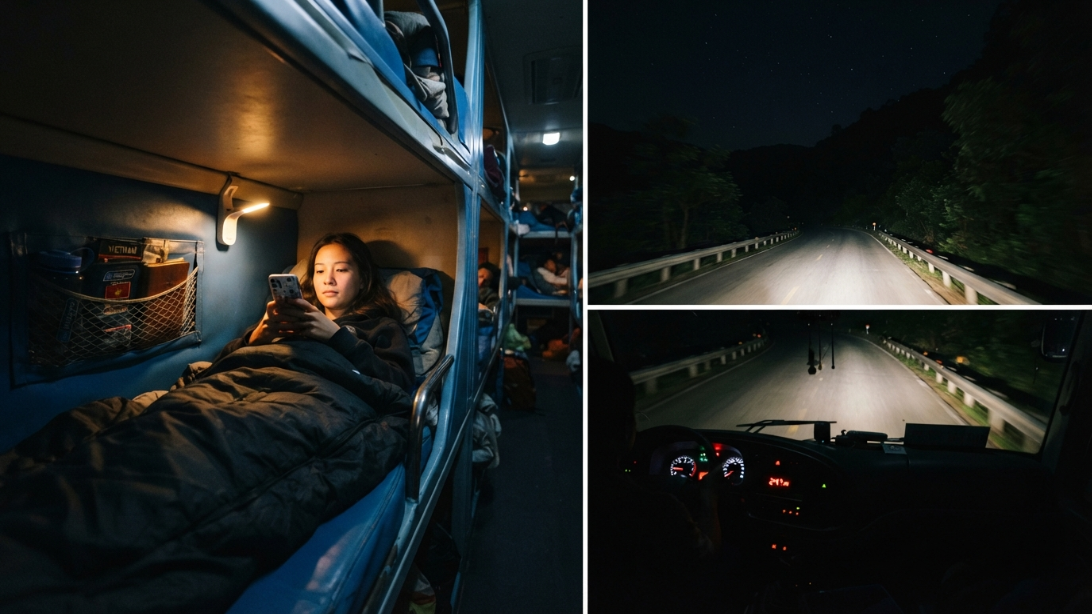
The overnight transport strategy is the single most consistently underused money-saving tool available to long-term backpackers, and it compounds in value the longer the trip runs because it eliminates one night of accommodation for every overnight journey taken.
An overnight bus from Hanoi to Hue in Vietnam costs $12 and eliminates a $10 to $15 hostel night while covering a seven-hour journey. An overnight train from Budapest to Kraków costs $20 to $40 in a couchette and eliminates a $15 to $20 hostel night while covering a journey that would otherwise require a daytime seat and a separate night’s accommodation. An overnight ferry from Tallinn to Stockholm costs $30 to $60 for a basic cabin and eliminates both a hostel night and the cost of a separate daytime transport ticket. Each individual overnight journey saves $10 to $30 in eliminated accommodation. Across twelve months of regular long-distance movement, this strategy saves $500 to $1,500 in total without requiring any sacrifice in comfort beyond sleeping in a moving vehicle, which most long-term backpackers find genuinely comfortable by month two.
Booking overnight transport through Omio, 12Go Asia, or direct national rail websites three to seven days in advance finds the lowest fares before the price increases that accompany last-minute booking. Sleeper buses in Southeast Asia specifically are worth booking through Baolau or directly at the bus company offices in each city rather than through hostel front desks, which add a markup of $2 to $5 per ticket that accumulates across dozens of journeys.
3. Cook Your Own Food at Least Twice a Day
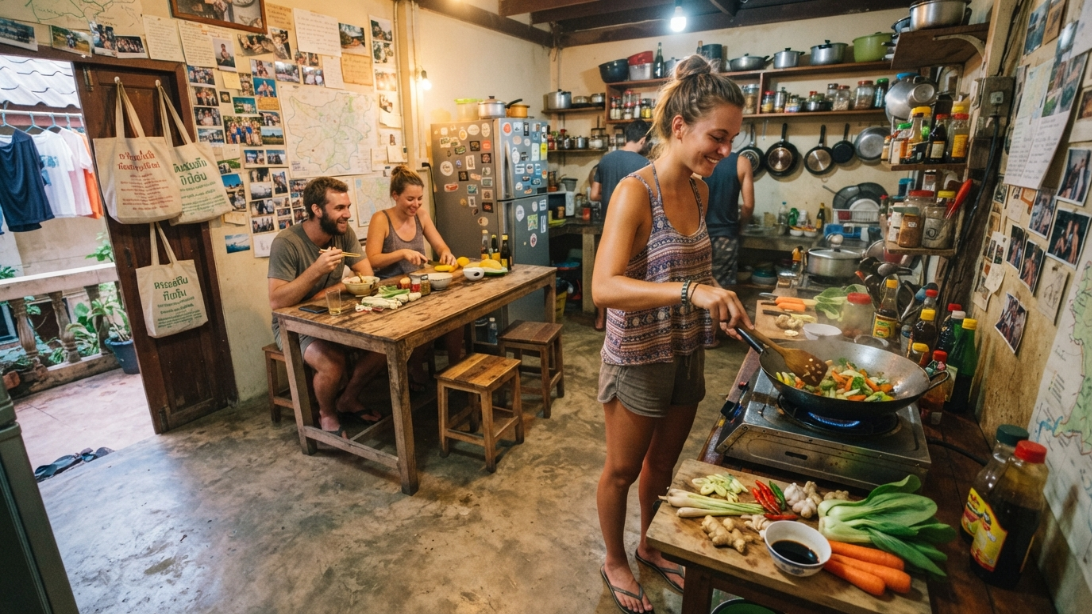
The food budget is the spending category with the most daily flexibility and the one where long-term backpackers most consistently overspend relative to their stated budget. Restaurant meals at tourist-adjacent establishments in cheap countries cost $4 to $8 each. Three meals daily at these prices costs $12 to $24 per day on food alone, which in many budget destinations represents the entire intended daily budget before accommodation and activities are considered.
Cooking in hostel kitchens reduces food costs to $5 to $8 per day for three meals in most countries, which over a year represents savings of $2,500 to $5,000 compared to eating every meal at restaurants. The hostel kitchen strategy requires identifying hostels with functioning, clean kitchens at the booking stage rather than discovering their absence after arrival. Hostelworld and Booking.com both allow filtering by hostel facilities including kitchen access, and prioritizing this filter over other amenities produces meaningfully lower food costs without sacrificing nutrition or meal quality.
Local markets rather than supermarkets provide the cheapest fresh ingredients in most countries. A morning market in Vietnam, Thailand, or Guatemala sells produce at prices 40 to 60 percent below what a tourist-adjacent supermarket charges for the same items. Knowing where the local market is in each new city is the first-day research task that pays daily dividends throughout the stay.
The middle path that most experienced long-term backpackers settle into is cooking breakfast and lunch in the hostel kitchen and eating one meal out daily at local street food stalls or market restaurants rather than tourist restaurants. This approach provides the cultural food experience that traveling for months should include while keeping total daily food costs between $8 and $12 in cheap regions.
Money Saving Travel Tips for Long Term Backpackers on Accommodation
Accommodation is the largest fixed daily cost in long-term backpacking and the category with the most strategies for meaningful reduction beyond simply choosing cheaper destinations.
Work for Accommodation Through Workaways and Helpx
Workaway and HelpX are platforms that connect travelers with hosts who offer free accommodation and sometimes meals in exchange for four to five hours of work daily. Annual membership costs $49 for Workaway and $20 for HelpX, and the accommodation value they provide across even two months of work exchanges represents the most dramatic cost reduction available in long-term travel.
Work exchange opportunities include teaching English at guesthouses, helping with social media for small tourism businesses, farm work, hostel reception shifts, construction assistance on eco-projects, and childcare for traveling families. The quality of experiences varies significantly between hosts, and reading all available reviews before committing to a specific placement filters out the arrangements that consistently disappoint in favor of those that consistently deliver the accommodation and experience they promise. Booking two to four weeks in advance for popular placements in high-demand destinations prevents arrival without confirmed housing, which is the specific failure mode that pushes backpackers into expensive last-minute accommodation.
Couchsurfing as a Cultural Exchange
Couchsurfing provides free accommodation with local hosts who offer a spare couch, room, or floor space in exchange for the cultural exchange of hosting an international traveler. The platform has moved toward a paid membership model at $15 per year that supports ongoing platform maintenance and filters the user base toward more committed participants.
The financial benefit is obvious. The less-discussed benefit is experiential: a night at a local host’s apartment in Medellín, Tbilisi, or Porto provides cultural context and personal connection that no amount of hostel common room socializing fully replicates. Hosts who open their homes to travelers are almost universally the most interesting locals a backpacker meets in any city, and the conversations that happen around their dinner tables often constitute the most memorable experiences of entire trips.
4. Use the Right Banking Setup Before You Leave
Banking fees on international travel are one of the most significant and most invisible budget leaks in long-term backpacking. A traveler using a standard bank debit card abroad pays $3 to $5 per ATM withdrawal plus a 1 to 3 percent foreign transaction fee on every card purchase. Across twelve months of daily transactions, these fees accumulate to $600 to $1,200 in pure waste that buys nothing beyond the privilege of accessing your own money.
Charles Schwab’s High Yield Investor Checking Account reimburses all international ATM fees worldwide at the end of each monthly statement period and charges no foreign transaction fees on card purchases. It is free to open, has no monthly maintenance fee, and requires no minimum balance. It is the single most recommended banking product in long-term backpacker communities for good reason: it eliminates the entire category of banking fees from the travel budget.
Wise formerly TransferWise provides a multi-currency debit card that converts between currencies at the mid-market exchange rate with a small transparent fee, which consistently beats the exchange rates offered by airport exchange booths, hotel reception desks, and in-destination money changers by 2 to 4 percent. On a $20,000 annual travel budget, a 3 percent improvement in exchange rates represents $600 in additional travel funds from the same total spending.
Carry a backup credit card from a different network than your primary card, stored separately from your wallet in a money belt or hidden compartment of your pack. The specific card that provides the most value for backpackers is the Chase Sapphire Preferred or Capital One Venture, both of which earn travel points on all purchases and have no foreign transaction fees. The travel points accumulated across a year of expenses, booked through the card’s travel portal, often provide enough value for one or two free flights within a continent.
5. Slow Travel as the Most Underrated Financial Strategy
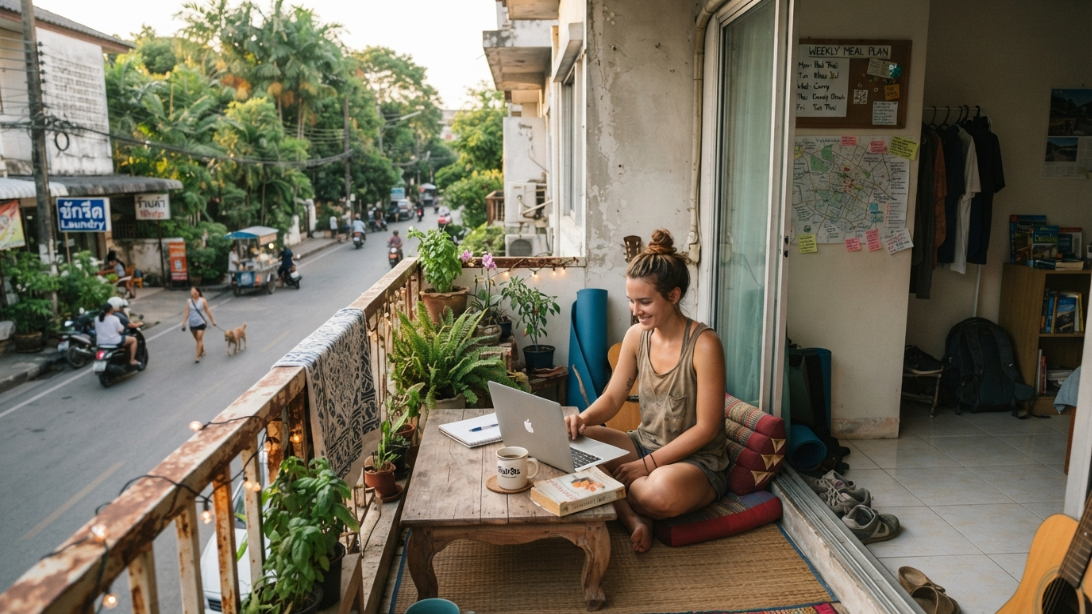
Slow travel, spending two to four weeks in each location rather than one to three days, is the money-saving strategy that most backpackers intellectually understand and emotionally resist because the excitement of constant movement feels more like traveling than settling into a place for weeks at a time.
The financial logic is straightforward and significant. Weekly and monthly hostel and apartment rates are 25 to 50 percent lower than nightly rates in virtually every destination in the world. A hostel bed that costs $15 per night on a nightly rate costs $70 to $80 per week on a weekly rate, saving $25 per week or $100 per month from accommodation alone. A private apartment that costs $50 per night on Airbnb costs $600 to $900 per month on a monthly booking, saving $600 to $900 per month compared to nightly pricing for a private space with a kitchen that eliminates restaurant costs simultaneously.
Beyond accommodation savings, slow travel eliminates the transportation costs between destinations that rapid movement accumulates continuously. A backpacker visiting twelve cities in three months spends significantly more on transportation than one visiting four cities in the same period. The transportation savings from slow travel in most regions amount to $150 to $300 per month.
The experiential argument for slow travel compounds the financial one: the place that felt like a tourist destination at day three becomes a neighborhood by week two. Local restaurant owners recognize you. Market vendors know what you buy. You discover the coffee shop that no guidebook mentions and the viewpoint that requires local knowledge to find. These are the experiences that distinguish long-term travel from an extended vacation, and they are available only to travelers who stay long enough to let them develop.
6. Negotiate Everything Negotiable
Price negotiation is a normal and expected part of commercial interaction in most of the countries that budget backpackers visit most frequently, and treating marked prices as fixed amounts leaves consistent money on the table across hundreds of daily transactions.
In markets, tuk-tuk rides, guesthouse walk-in rates, activity bookings, and souvenir purchases across Southeast Asia, South Asia, Central America, and parts of Africa and the Middle East, opening with an offer of 50 to 60 percent of the stated price and settling at 65 to 75 percent is the standard negotiation pattern that both parties understand and expect. The specific phrase that opens negotiations most effectively varies by culture but almost universally involves a smile, genuine interest in the product or service, and an alternative price offered conversationally rather than confrontationally.
Guesthouse and hostel walk-in rates are negotiable more often than travelers realize, particularly when the establishment has visible vacancies and you are arriving late in the day. A manager with empty rooms at 4 PM is more receptive to a negotiated rate than one with a fully booked property receiving you at noon. Offering to pay cash rather than card, to stay for multiple nights, or to book additional activities through the property all provide leverage that a polite conversation can convert into meaningfully lower accommodation costs.
7. Leverage Free Activities Aggressively
Every destination visited by long-term backpackers contains more free or nearly free cultural, natural, and social experiences than paid ones, and the discipline of identifying these before spending on alternatives produces both financial savings and often better experiences.
Free walking tours exist in virtually every major city visited by international travelers. They operate on a tips-only model where guides work without a fixed fee and earn based on the quality of the experience they provide, which creates strong incentive for excellent guiding. Sandeman’s New Europe operates free walking tours across fifteen European cities. Similar operators exist in every Southeast Asian capital, every Central American city of any size, and most South American cities. A two-to-three-hour walking tour that provides historical context, neighborhood orientation, and local food recommendations that would take days to accumulate independently is worth a $10 to $15 tip that still costs less than most paid alternatives.
National parks and natural areas are the free entertainment budget of long-term backpackers in regions where nature is the primary draw. Vietnam’s national parks charge nominal entry fees of $2 to $5. Central American cloud forests and beaches accessible on public buses cost the bus fare and nothing more. Eastern European hiking in the Carpathian Mountains, the Julian Alps, and the Rhodope Mountains provides extraordinary outdoor experiences with no admission fee and trail infrastructure maintained by national forestry services.
8. Generate Income While Traveling
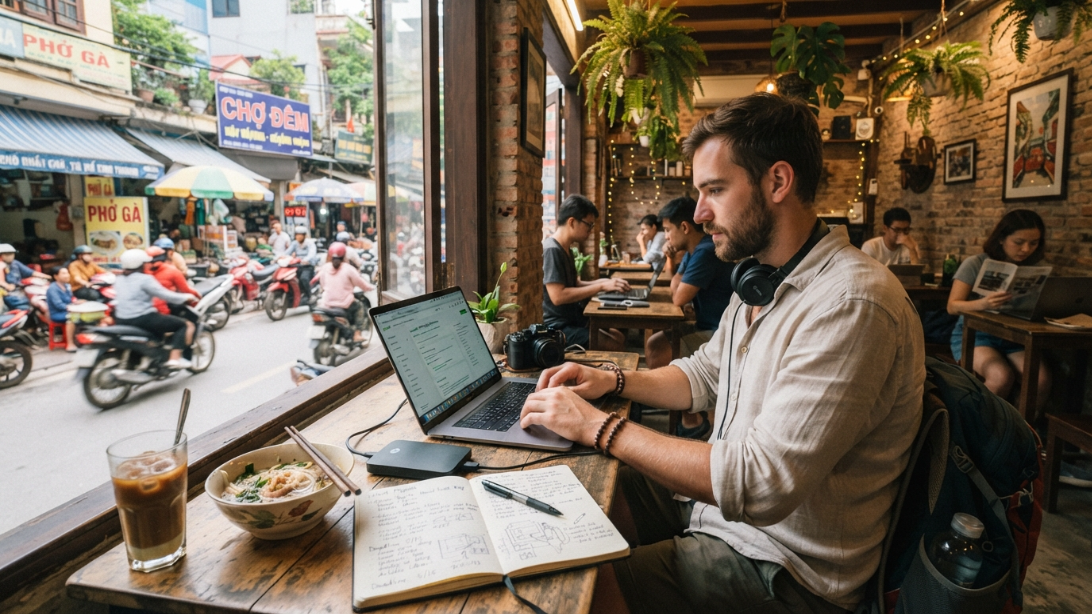
The distinction between a backpacker with a fixed savings runway and one with income generation built into the trip is the distinction between someone who must eventually go home and someone who can extend the trip indefinitely. Building even modest income generation into long-term travel changes the financial psychology of the trip entirely.
English teaching is the most accessible income source for native English-speaking backpackers. A TEFL certificate from an online provider like International TEFL Academy costs $200 to $395 and opens positions in language schools across Asia, Eastern Europe, and Central America that pay $800 to $2,000 per month in local wages, which in cheap-country contexts covers all living expenses and sometimes produces meaningful savings. Online teaching through platforms like VIPKid, Preply, and iTalki provides income in US dollars that travels with you regardless of location, requiring only a reliable internet connection and a one-hour time commitment per session.
Freelance digital work including writing, graphic design, web development, social media management, and virtual assistance can be established before departure and maintained from anywhere with internet access. Platforms including Upwork, Fiverr, and Toptal connect freelancers with clients internationally. A backpacker earning $500 to $1,000 per month from freelance work in a destination where daily costs run $30 to $40 is effectively traveling for free while building professional skills and portfolio material that enhance their career position on return.
Travel blogging and content creation takes significantly longer to generate meaningful income than most aspiring travel bloggers expect, but the combination of a monetized blog, affiliate income from accommodation and gear recommendations, and social media brand partnerships can produce $500 to $3,000 per month within eighteen to twenty-four months of consistent, quality content production. The realistic timeline and genuine effort required make this the income source most worth starting before departure rather than after arrival.
9. Buy Gear Once and Buy it Right
Gear purchasing is the pre-departure cost category where the instinct to save money produces the most expensive long-term outcomes. A $30 backpack that fails at month three in Southeast Asia costs more in replacement and lost time than the $120 pack that lasts a decade. A $15 rain jacket that soaks through in a Vietnamese downpour costs more in discomfort and replacement than the $80 packable jacket that actually works.
The gear categories worth buying quality for once include the main backpack, rain jacket, footwear, sleep sack, and portable battery pack. The gear categories where budget options perform adequately include clothing beyond rain gear, basic toiletries, and travel towels.
Osprey Farpoint 40 or Osprey Faraway 40 are the most consistently recommended backpacks in long-term travel communities for the combination of durability, carry comfort, and airline carry-on compliance that eliminates checked bag fees across years of travel. Patagonia Houdini or Arc’teryx Cerium packable jackets compress to fist size and handle rain and wind across the climate range that most long-term itineraries cover. Allbirds or Merrell Vapor Glove shoes are the walking shoe options that hold up across high daily mileage without the weight of hiking boots or the durability problems of fashion footwear.
Buying gear secondhand through Facebook Marketplace, Poshmark, or backpacker hostel gear exchanges reduces the initial investment while still accessing quality brands. Many long-term travelers sell gear before flying home from their final destination, creating a secondary market in backpacker hub cities where quality gear changes hands at 40 to 60 percent of retail price.
Frequently Asked Questions
What are the most effective money saving travel tips for long term backpackers who are already on the road and overspending?
Audit the four spending categories immediately: accommodation standard creep, food comfort spending, activity inflation, and transportation convenience. Identify which one is driving the overspend by reviewing the last two weeks of spending against the intended daily budget. Address accommodation first because it is the largest fixed cost with the most immediate solutions: move to a cheaper hostel, negotiate a weekly rate, or book a Workaway placement for two to three weeks. Food is second because cooking twice daily in a hostel kitchen can reduce food spending by $10 to $15 per day immediately.
How much money do I actually need for a year of backpacking?
In exclusively budget regions including Southeast Asia, Central America, and Eastern Europe, $12,000 to $15,000 covers a year of comfortable backpacker travel including flights, accommodation, food, activities, and unexpected costs. Adding Western European months, Australia, or Japan increases this to $18,000 to $25,000 depending on the proportion of expensive destination time. These figures assume genuine budget travel practices rather than budget intentions with regular comfort upgrades. The most accurate planning tool is researching the specific countries on your itinerary using Budget Your Trip and Numbeo for current cost data rather than relying on general estimates.
Is travel insurance worth the cost for long term backpackers?
Yes, without qualification. Medical emergencies abroad without insurance produce costs that destroy travel funds and sometimes require emergency financial assistance from family. World Nomads and SafetyWing both offer policies designed specifically for long-term backpackers. SafetyWing costs $42 per four weeks and provides basic medical coverage in most countries. World Nomads costs $80 to $120 per month and provides more comprehensive coverage including adventure activities, gear theft, and trip interruption. The $1,000 to $1,500 annual cost of comprehensive travel insurance is the best money spent in any long-term travel budget.
How do I handle visa costs across a year of backpacking?
Research visa requirements and costs for every country on your itinerary before departure using the Timatic database or each country’s official embassy website. Many Southeast Asian countries offer visa-on-arrival or e-visa options for US, UK, and EU passport holders at $25 to $50 per entry. Some countries offer free entry for stays under thirty days. Visa costs across a year of multi-country travel typically run $200 to $600 total, which is a significant budget line that surprises backpackers who did not research it in advance.
What is the best way to handle money security while long term backpacking?
Divide money across three locations that are never all in the same place simultaneously: a money belt worn under clothing containing the passport and a portion of cash, the main backpack containing a separate card in a hidden compartment, and a digital backup of all important documents stored in email and cloud storage. Never carry all cards and cash in a single wallet or single bag. Use ATMs attached to banks during business hours rather than standalone machines in low-traffic areas. Notify your bank of travel plans before departure and set up account alerts for all transactions so unauthorized use is immediately detectable.
Conclusion
Long term backpacking is one of the most financially achievable forms of extended world travel available to anyone with the organizational discipline to set it up correctly before leaving and the behavioral discipline to maintain spending habits that look unremarkable in the moment but compound dramatically across months of daily decisions. The strategies above are not theories about how budget travel could work. They are the specific mechanics of how it actually does. Where in the world are you planning to take this?